Tortelloni are like the big brothers of tortellini – same shape, just way bigger. Outside of Italy, people often call them “tortellini” no matter the size, but they are different!
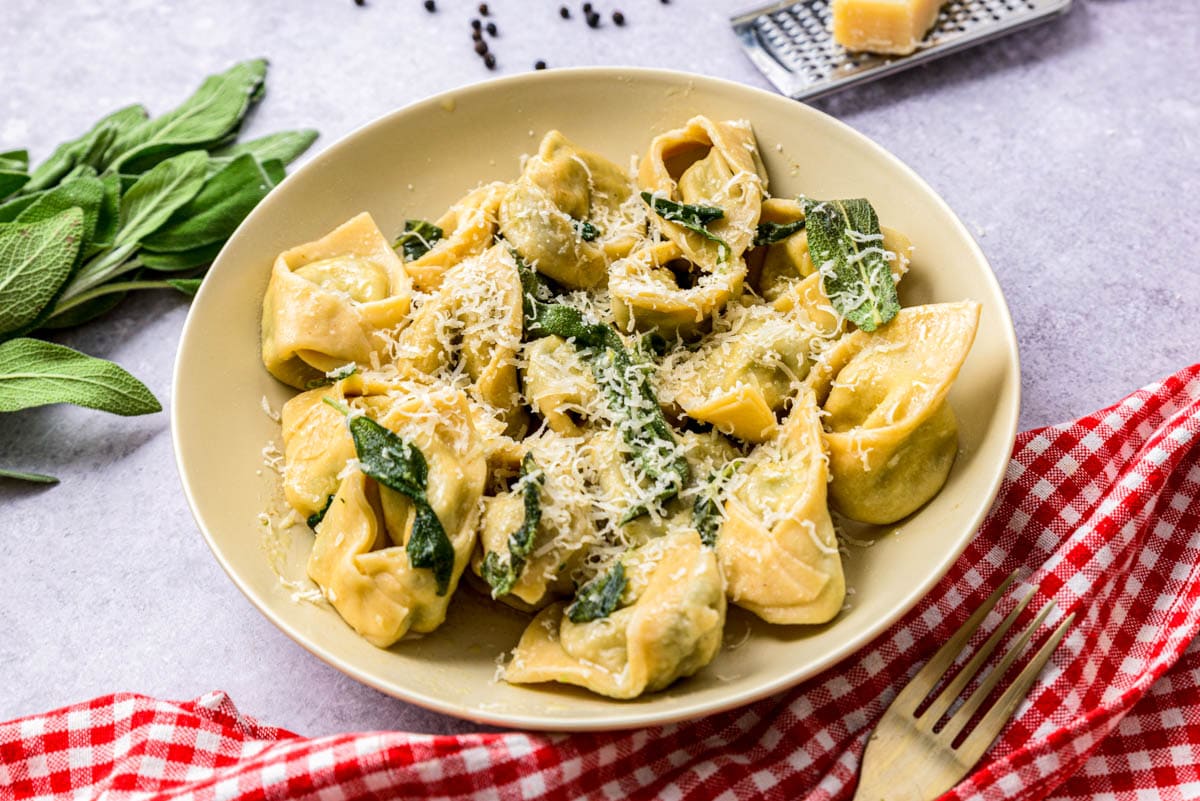
Tortelloni can be filled with many things, but ricotta and spinach is one of the classic filling combos. They are known in Italian as Tortelloni ricotta e spinaci and often served in a sauce made with sage-flavored butter and freshly grated Parmesan cheese.
These tortelloni are deliciously creamy and flavorful, and the pasta has the perfect bite to it.

Ingredients

Dough Ingredients:
- Flour – For an authentic taste, use “00 flour” (found in specialty stores). All-purpose flour also works. In general, use white flour with at least 12-13% protein for the best result.
- Eggs – Large eggs. If you’re using smaller eggs, you may need an extra one.
- Salt

Filling and sauce Ingredients:
- Spinach – I like to use fresh spinach, but frozen spinach also works. Just make sure to drain it as much as possible once cooked.
- Ricotta cheese – Alternatively you can use cottage cheese, mascarpone, or cream cheese (it will change the flavor slightly but still be delicious). Make sure to choose a cheese that is creamy and not overly watery.
- Parmesan cheese – Use Parmigiano Reggiano for the best taste. If you can’t find any, you can also use Grana padano.
- Black pepper – Use freshly cracked pepper for the best taste.
- Butter – To make the sauce.
- Fresh sage leaves – Adds extra flavor to the dish.
- Salt
Recipe Tips
- If your eggs are smaller, you might need to add another one to the mix. Start with 3 eggs and add a fourth if needed.
- If using frozen spinach, don’t forget to drain it once it’s cooked.
- If the filling is too watery, you can add a couple of tablespoons of breadcrumbs to fix it.
- For pasta making, you can either go the traditional route and create a flour volcano on the table, crack the eggs in the center and slowly add some of the flour into the eggs or mix everything in a bowl for a mess-free process.
- When making the pasta sheets, flatten the dough balls to about 1/3 inch (or 1cm). Also ensure the dough rectangle is not wider than the pasta machine to avoid issues. Do not skip any number in the pasta machine to prevent creasing and clumping.
- Do not flatten the pasta sheet too much. Otherwise, it can become too fragile and break once filled.
- For cutting, you can use a pasta cutter or knife. If using a knife, layer all the pasta sheets, measure the cuts, and cut through all layers.
- To prevent the pasta dough from drying out, work with someone to speed up the process, cover the pasta with a damp kitchen towel, or gently spray the pasta with water occasionally.
Get a Taste of Europe
Join 3000+ readers and get European recipes and family favorites to your inbox every week.
You can unsubscribe anytime. No spam. For more details, review our Privacy Policy.
How to Make Ricotta & Spinach Tortelloni – Step by Step Instructions

First, wash the spinach and cut the end of the stems. Then roughly chop the spinach.


Next, add the spinach to a pot with a splash of water and a pinch of salt. Cook on low heat until the spinach is soft, stirring regularly.


Then remove the spinach from the pot, strain it well, and chop it into smaller pieces.
Now add the cooked spinach to a bowl with the ricotta cheese, the parmesan cheese, salt, and black pepper. Mix well, cover and set aside.


Next, we’ll make the pasta dough – there are two ways.
You can pile the flour into a mountain on a clean, non-porous surface, and make a well in the middle so you end up with a volcano shape.
Then crack the eggs into the center of the flour volcano and add a pinch of salt. Now carefully mix the eggs with a fork. Gradually incorporate the flour into the eggs until fully combined.
Alternatively, for a mess-free process, you can mix the dough in a large bowl.

Next, knead the dough on a floured surface for about 10 minutes until you have a soft ball. Then cover it in plastic wrap and let it rest in the fridge for 30 minutes.

Once the dough has rested, remove it from the fridge and divide it into two equal parts.

Dust your work surface with flour and use a rolling pin to flatten one of the balls into a long, rectangular shape, about 0.4 inches or 1 centimeter thick.
Then secure the pasta machine to the side of your table and set it to the largest number. Pass the flattened dough through the pasta machine, decreasing the numbers one by one until the dough is thin enough to be slightly see-through (your fingers should be visible through the pasta dough).

If needed, cut the dough into smaller pieces to make it more manageable. Repeat this process with all the dough.

Next, lay out all the dough on a flat surface and use a pasta cutter to cut it into about 2.5 x 2.5 inch (or 6 x 6 centimeter) squares.
Distribute the filling by placing a walnut-sized portion in the center of each pasta square.

Now fold the pasta square into a triangle and gently press the edges to seal the filling inside.

Then fold the opposite sides of the pasta to form a ring. Press gently. Repeat with all the tortelloni. Store them covered on a flat, floured surface (a tray works well).


In a medium-sized pan, melt the butter, then add the sage leaves and salt and gently swirl. Cook for 1 minute on low heat to infuse the butter with the sage flavors.

Next, cook the pasta in boiling water until it floats, and quickly transfer it to the pan with the sage butter.
Swirl the pasta around in the pan and use a spoon to pour the butter over the tortelloni.

Serve the ricotta and spinach tortelloni hot with a generous amount of grated parmesan cheese. Enjoy!
Storage Tips
Fresh pasta can be stored in the fridge for up to 2 days in sealed containers dusted with flour. However, sometimes the filled pasta can stick to the container, causing the pasta to break.
My advice is to either use all the fresh tortelloni or freeze them before cooking. Freeze in single layers. Once frozen, you can transfer them to a freezer-safe bag or container. Freeze for up to 3 months.
Related Recipes
Here are some other Italian recipes you might want to enjoy as a first course or main meal!
- Spaghetti alle vongole (Spaghetti with Baby Clams)
- Spaghetti aglio e olio
- Butternut Squash Risotto (w/ Italian Sausage)
- Homemade Potato Gnocchi
- Italian Eggplant Parmigiana (Parmigiana di melanzane)
- Artichoke Risotto (Risotto ai carciofi)
Ingredients
- 3 1/4 cups flour, preferably 00 flour; all-purpose flour also works (at least 12% protein)
- 3 large eggs, possibly more
- a pinch of salt
- a bunch of spinach, about 3 cups, roughly chopped
- 9 ounces ricotta cheese, about 1 cup
- 3.5 ounces parmesan cheese, grated; about 1 cup
- 1/2 teaspoon salt
- 1/2 teaspoon black pepper
- 1/4 cup butter
- a bunch of fresh sage leaves
- a pinch of salt
- parmesan cheese, grated; for garnish
Instructions
- Wash the spinach and cut the end of the stems. Roughly chop the spinach.a bunch of spinach
- Add the spinach to a pot with a splash of water and a pinch of salt. Cook on low heat until soft, stirring regularly. Then remove the spinach from the pot and strain well.
- Add the cooked spinach to a bowl with the ricotta cheese, the parmesan cheese, salt, and black pepper. Mix well, cover and set aside.9 ounces ricotta cheese, 3.5 ounces parmesan cheese, 1/2 teaspoon salt, 1/2 teaspoon black pepper
- On a clean, non-porous surface, pile the flour into a mountain and make a well in the middle so you end up with a volcano shape.3 1/4 cups flour
- Crack the eggs into the center of the flour volcano and add a pinch of salt.3 large eggs, a pinch of salt
- Carefully mix the eggs with a fork. Gradually incorporate the flour into the eggs until fully combined. Alternatively, for a mess-free process, you can mix the dough in a large bowl.
- Knead the dough on a floured surface for about 10 minutes until you have a soft ball. Cover in plastic wrap and let it rest in the fridge for 30 minutes.
- Once the dough has rested, remove it from the fridge and divide it into two equal parts.
- Dust your work surface with flour and use a rolling pin to flatten one of the balls into a long, rectangular shape, about 1/3 inch or 1 centimeter thick.
- Secure the pasta machine to the side of your table and set it to the largest number.
- Pass the flattened dough through the pasta machine, decreasing the numbers one by one until the dough is thin enough to be slightly see-through (your fingers should be visible through the pasta dough). My machine reaches this point at number 5 (the largest number is 7). If needed, cut the dough into smaller pieces to make it more manageable. Repeat this process with all the dough.
- Lay out all the dough on a flat surface and use a pasta cutter to cut it into about 2.5 x 2.5 inch (or 6 x 6 centimeter) squares.
- Distribute the filling by placing a walnut-sized portion in the center of each pasta square.
- Fold the pasta square into a triangle and gently press the edges to seal the filling inside. Then fold the opposite sides of the pasta to form a ring. Press gently. Repeat with all the tortelloni. Store them covered on a flat, floured surface (a tray works well).
- In a medium-sized pan, melt the butter, then add the sage leaves and salt and gently swirl. Cook for 1 minute on low heat to infuse the butter with the sage flavors.1/4 cup butter, a bunch of fresh sage leaves, a pinch of salt
- Cook the pasta in boiling water until it floats, and quickly transfer it to the pan with the sage butter.
- Swirl the pasta around in the pan and use a spoon to pour the butter over the tortelloni.
- Serve hot with a generous amount of parmesan cheese.parmesan cheese
Notes
- Do not worry if some of the tortelloni aren’t perfect, this is the beauty of homemade pasta.
- If you’re using smaller eggs, you might need 4 instead of 3.
- If using frozen spinach, drain it well once cooked.
- If the filling is too watery, you can add a couple of tablespoons of breadcrumbs to fix it.
- When making the pasta sheets, ensure the dough rectangle is not wider than the pasta machine to avoid issues. Do not skip any number in the pasta machine to prevent creasing and clumping.
- Do not flatten the pasta sheet too much. Otherwise, it can become too fragile and break once filled.
- For cutting, you can use a pasta cutter or knife. If using a knife, layer all the pasta sheets, measure the cuts, and cut through all layers.
- To prevent the pasta dough from drying out, work with someone to speed up the process, cover the pasta with a damp kitchen towel, or gently spray the pasta with water occasionally.
Nutrition
This nutritional information has been estimated by an online nutrition calculator. It should be seen as a rough calculation and not a replacement for professional dietary advice.