Pasta al pesto is one of the quintessential and most well-known Italian pasta dishes.
The bright green sauce, known as pesto Genovese, is versatile and can be used with many different types of pasta. It comes from the Liguria region, specifically the city of Genoa (Genova in Italian). At this point, it is not only popular all over Italy but also around the world.
Pesto is a rich and slightly chunky sauce or paste that is super easy to make, keeps well in the fridge for a few days, and brightens not only pasta dishes but also focaccia sandwiches and more.
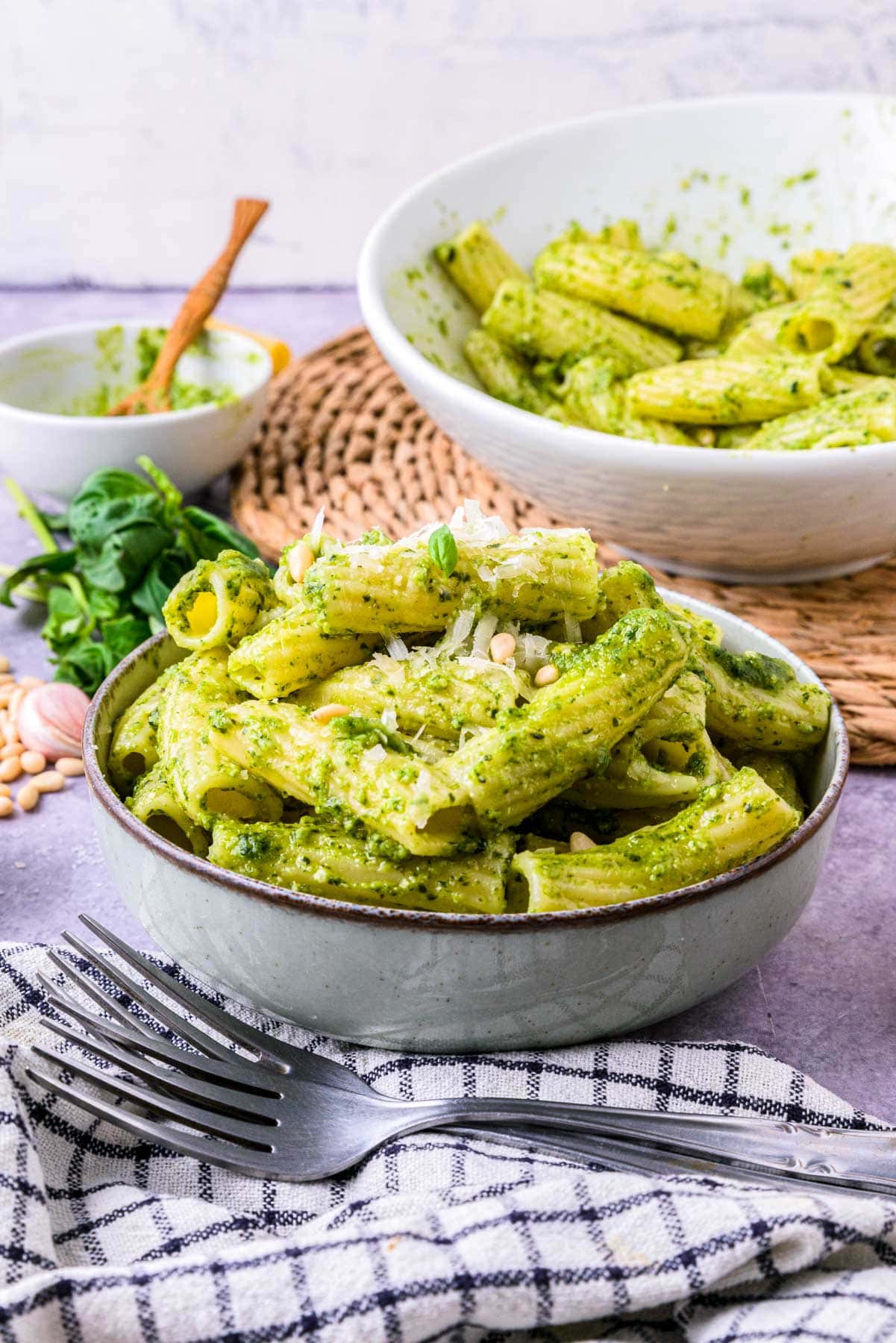
The main ingredients are fresh basil (an absolute must), Parmigiano Reggiano (plus pecorino if you can find it), pine nuts, olive oil, and garlic. As simple as that.
Ingredient Notes
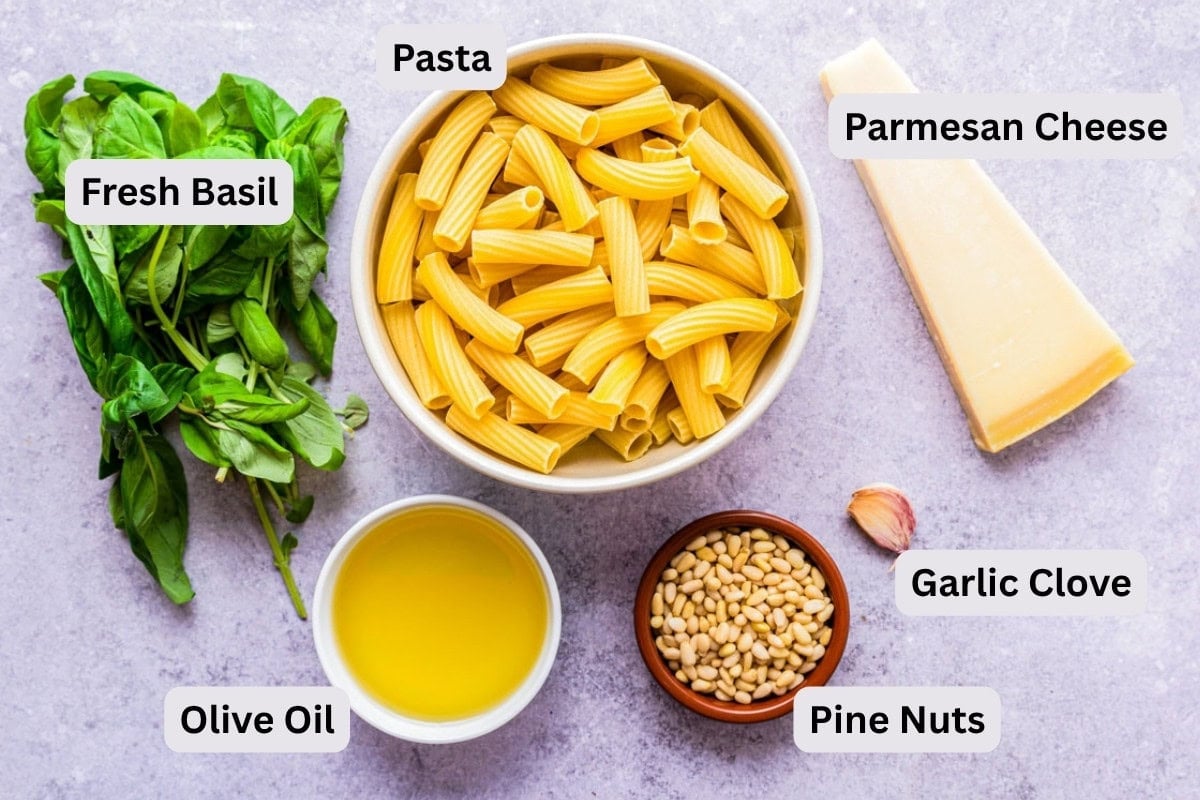
- Fresh basil – Use fresh basil that has vibrant green leaves and no dark spots. You’ll only use the leaves. Unfortunately, no other fresh herb will have the same flavor profile, so it can’t be substituted with anything else.
- Parmesan cheese – Preferably Parmigiano Reggiano, but Grana Padano will work too. You can also use a mix of Parmigiano Reggiano and Pecorino.
- Olive oil – If possible, use extra virgin or virgin olive oil. A good-quality refined olive oil can also work, but avoid using any other type of oil since it would impact the flavor of the final dish noticeably.
- Garlic clove – Use a fresh garlic clove that’s not dried out. You can adjust the amount you add to taste. Don’t substitute with garlic powder or granulated garlic.
- Pine nuts – They give a subtle nutty and creamy flavor to the sauce. If you can’t find them or they are out of your price range, you can use raw walnuts instead (not traditional).
- Pasta – Trofie, trenette, or straccetti are traditional choices, but you can choose any pasta shape for this recipe. Pasta shapes with nooks and crannies help the pesto adhere well (rigatoni, penne, fusilli, macaroni, etc.).
- Salt – To salt the pasta water and season the pesto if needed. Adjust the amount to taste.
Recipe Tips
- Don’t overcook the pasta. It should be al dente (cooked with a slight bite).
- If you use cold olive oil, the basil will remain bright green for a bit longer, but it’s not a must.
- If you want to be more traditional, you can substitute some of the Parmesan cheese with pecorino.
- Garlic can feel a bit strong, which is why I only add one garlic clove and remove the central stem. If you’re a garlic lover, you may want to add more. My advice is to add the garlic gradually to find your preference.
- You can use a food processor instead of an immersion blender.
- Once the sauce is done, I like to incorporate a few roughly chopped pine nuts for contrast of texture.
- Pasta al pesto can be eaten hot or cold as a pasta salad. If you want to enjoy the pasta cold, rinse the cooked pasta under running water until it reaches room temperature.
Get a Taste of Europe
Join 3000+ readers and get European recipes and family favorites to your inbox every week.
You can unsubscribe anytime. No spam. For more details, review our Privacy Policy.
How to Make Pasta al Pesto Genovese – Step-by-Step Instructions
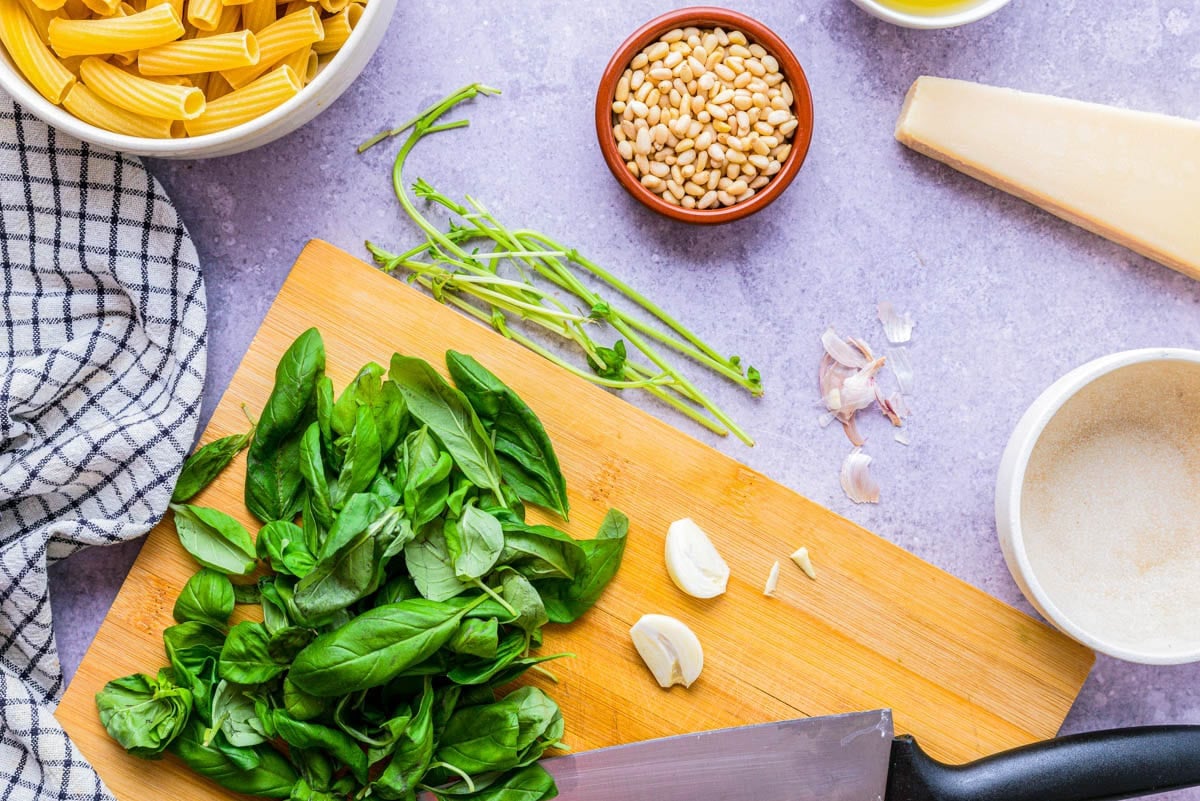
First, bring a pot of salted water to a boil for the pasta. While you wait, rinse and dry the basil and remove the stems. Also, peel the garlic clove and remove the central stem (optional).
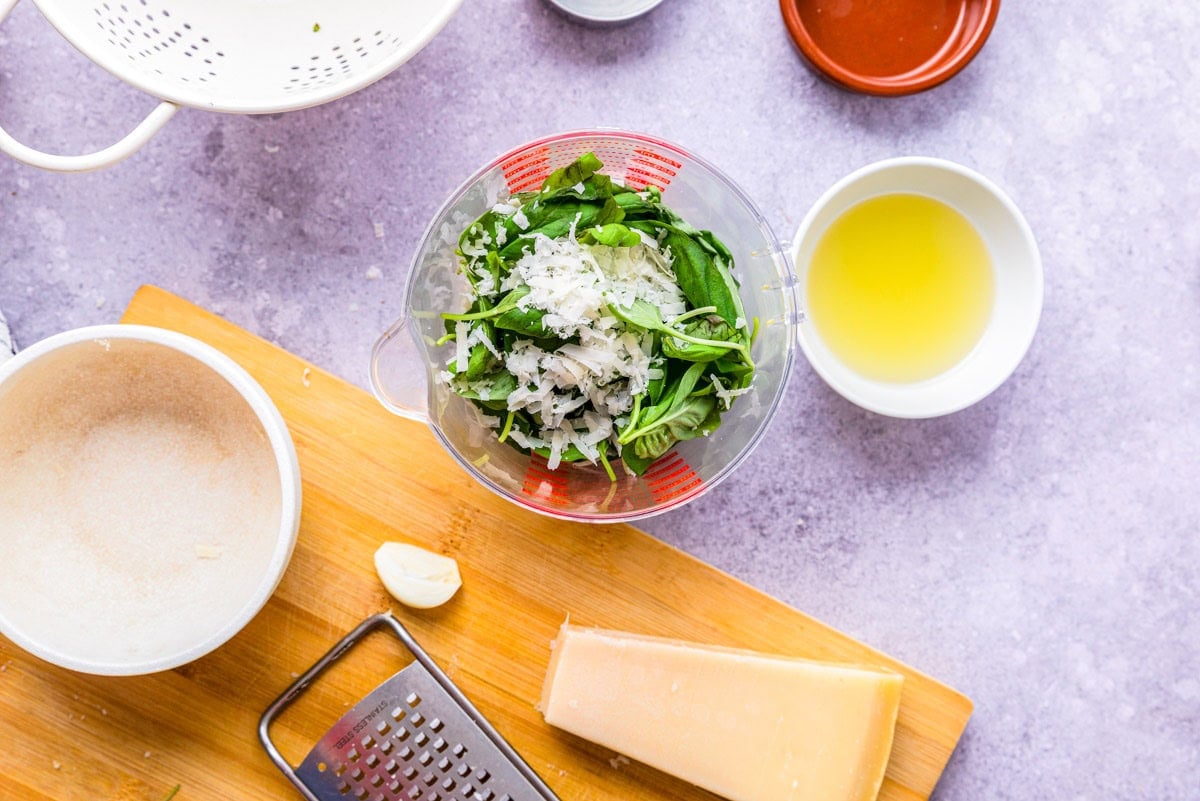
Shred the Parmesan cheese and then add the basil leaves, garlic, Parmesan cheese, and pine nuts to a container with high sides or a food processor/blender.
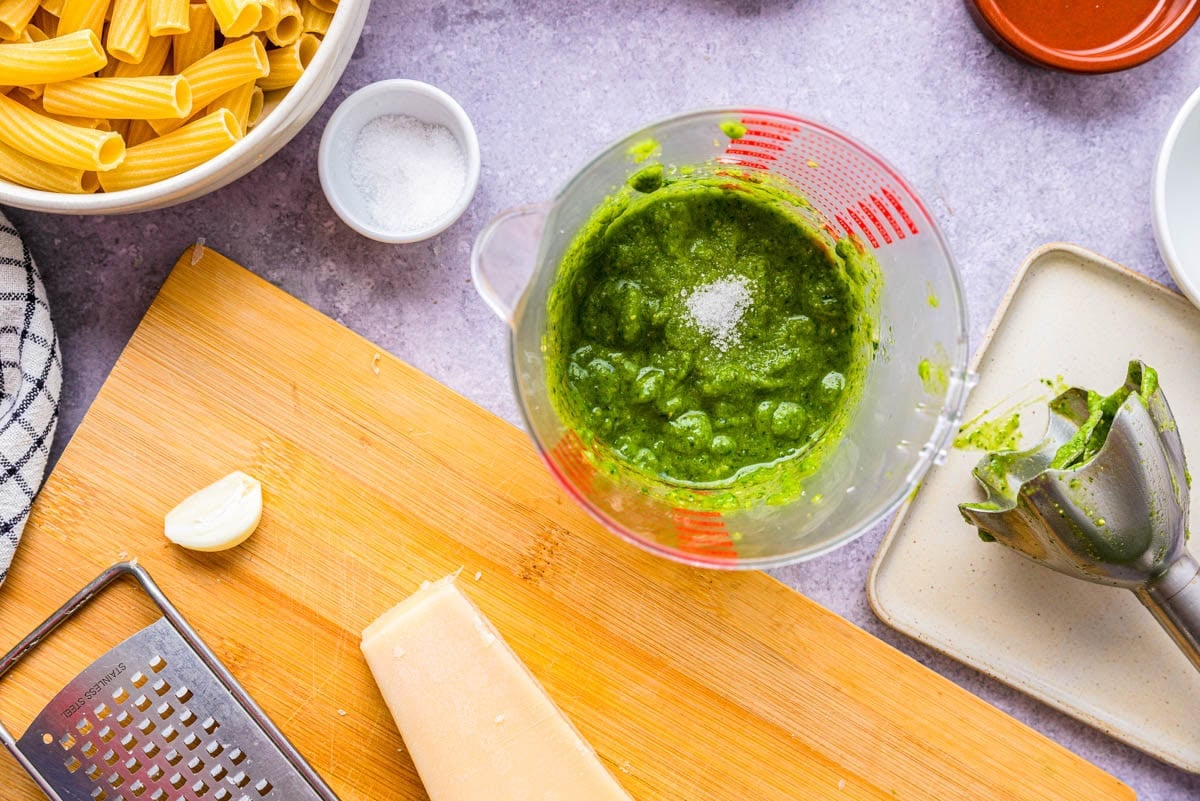
Pulse a few times to break everything down. Then slowly drizzle in the olive oil while blending until the pesto reaches your desired consistency. Scrape the sides as needed.
Taste the pesto and add salt if needed.
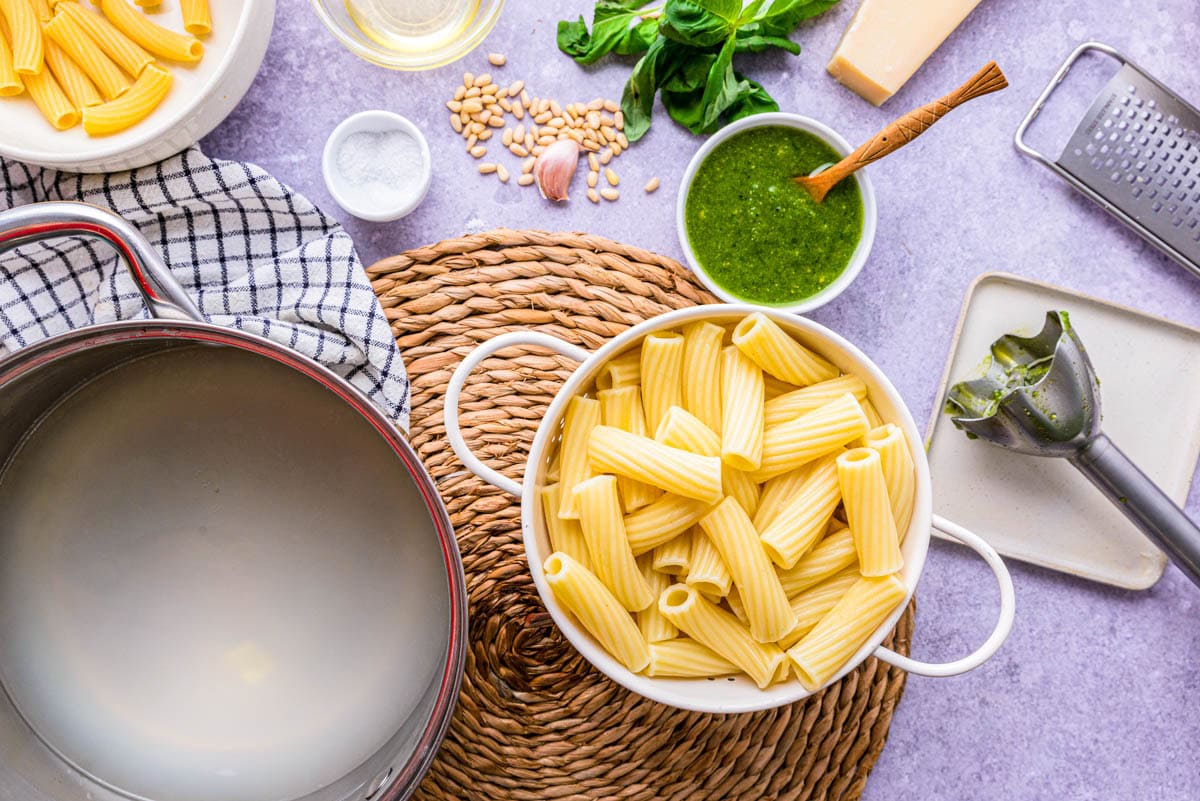
When the water is hot, cook the pasta according to the package directions until al dente.
Then drain the pasta, but reserve some of the pasta water just in case, and transfer the cooked pasta to a large bowl.
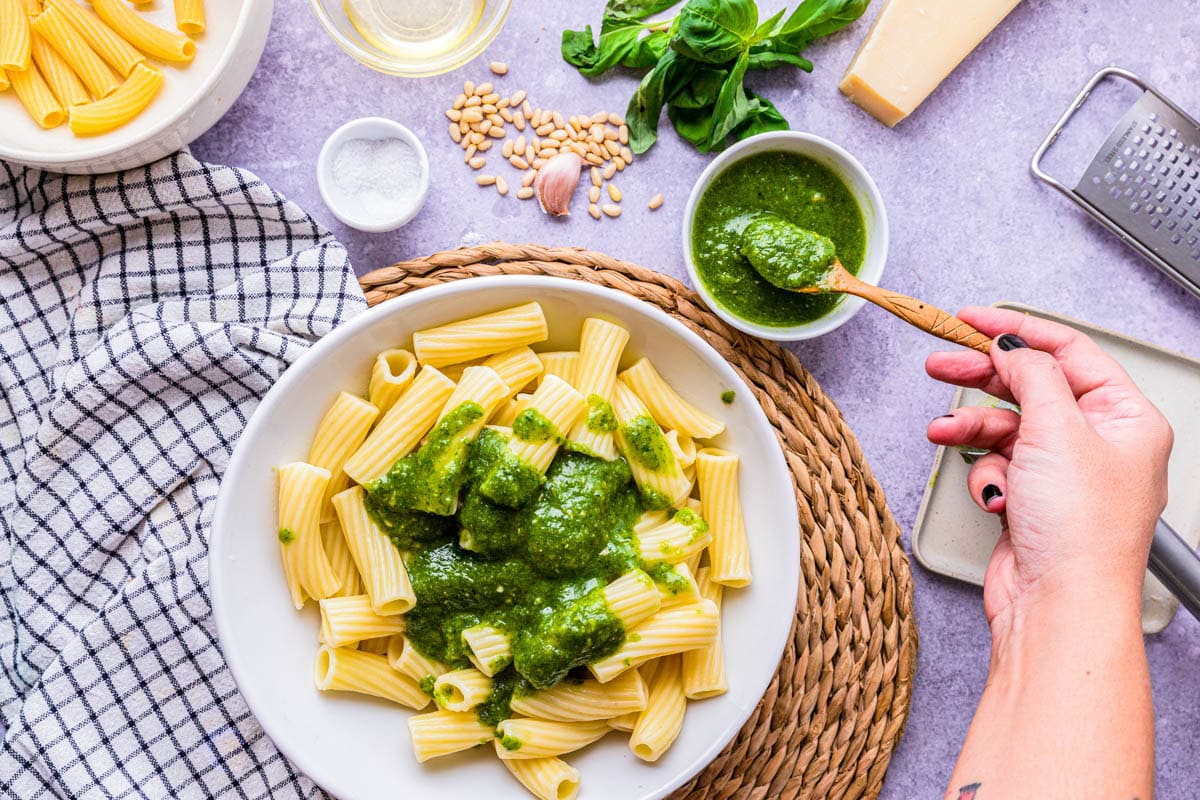
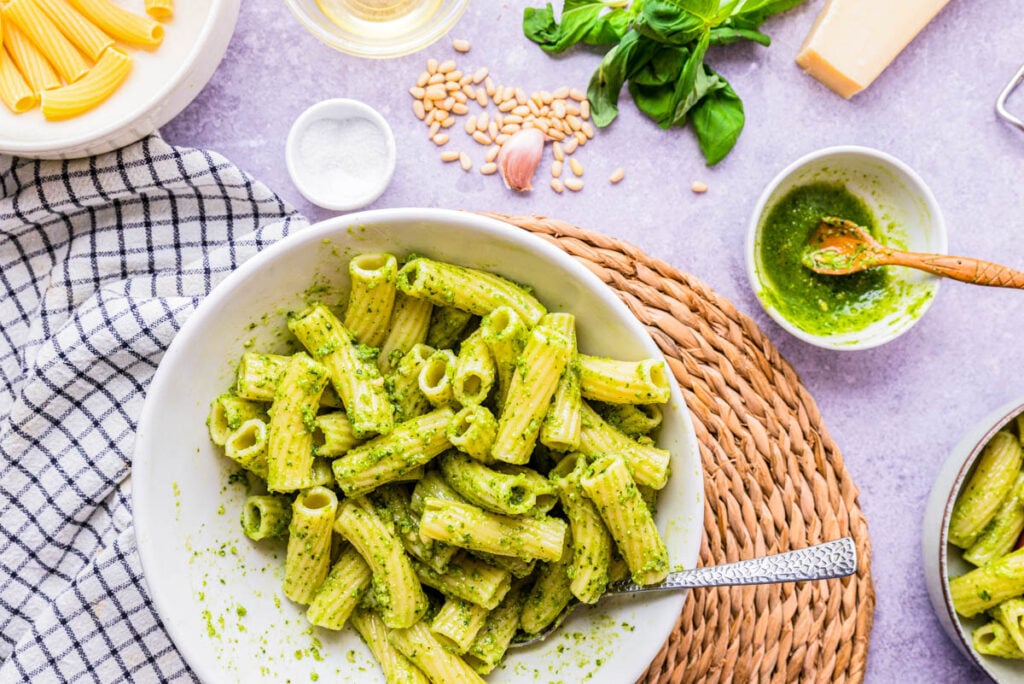
Add the pesto to the bowl and mix until the pasta is evenly coated. Add a splash of the pasta water you saved if needed.
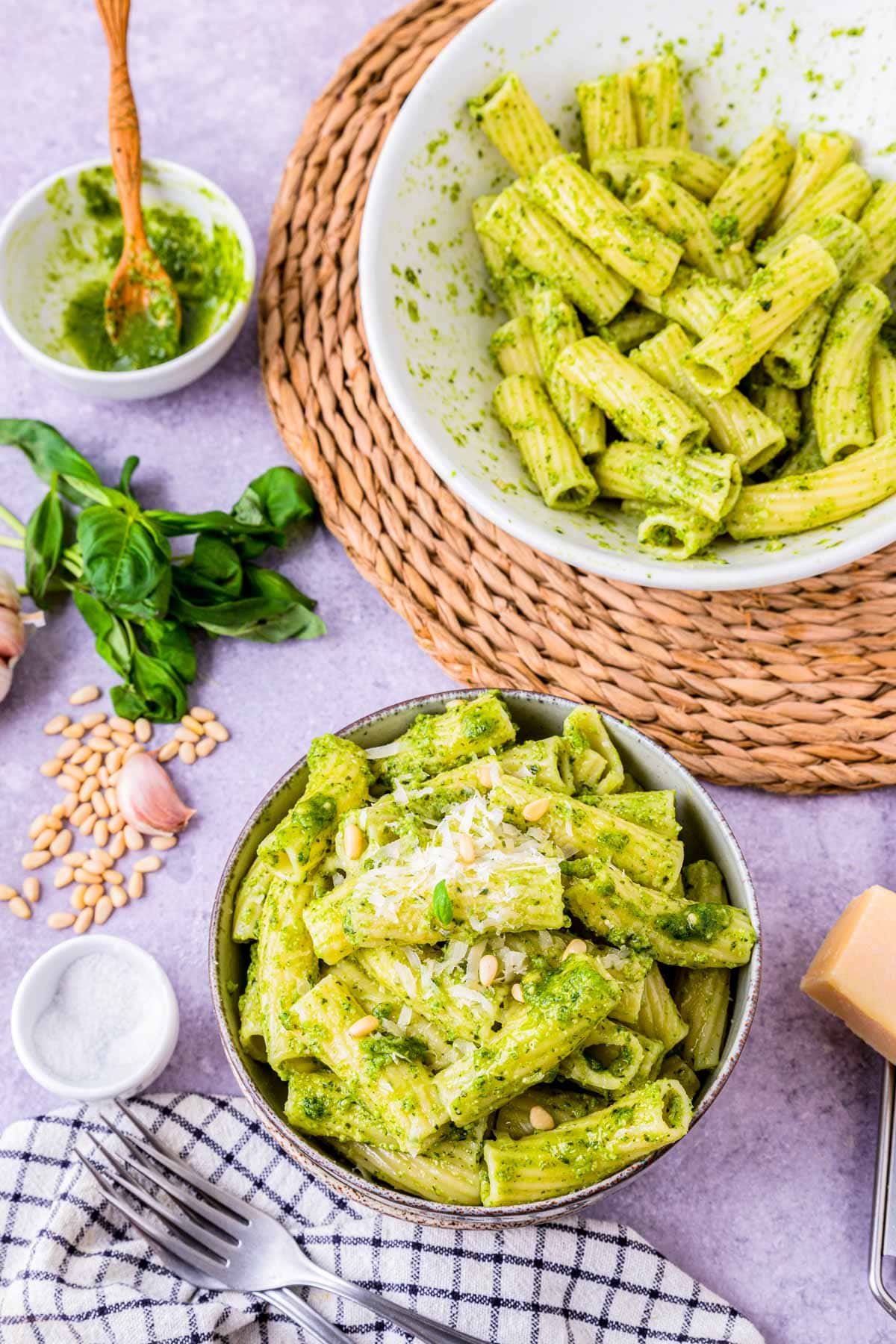
You can drizzle the pesto pasta with olive oil and garnish with grated Parmesan cheese and a few basil leaves before serving. Enjoy!
Storage Tips
Pasta al pesto can be made in advance and stored in the fridge for later consumption, which makes it a great meal prep recipe.
You can store the pesto separately in a sealed container in the fridge for up to a week. In this case, make sure to store it with a thin layer of olive oil so it “seals” the sauce and prevents any mold from forming.
If the pesto is already mixed with cooked pasta, store it in sealed containers in the fridge for up to 3 days.
Related Recipes
If you enjoyed this recipe, check out these other Italian recipes (all pasta dishes):
Ingredients
- 5.3 ounces fresh basil, leaves only (about 6 cups loosely packed)
- 1 garlic clove, more to taste
- 1/2 cup Parmesan cheese, grated (1.8 ounces)
- 1/3 cup pine nuts, (1.4 ounces)
- 1/3 cup + 1 tablespoon olive oil, preferably extra virgin
- a pinch of salt, more to taste
- 8.5 ounces pasta, see notes
Instructions
- Bring a large pot of salted water to a boil for the pasta.
- While the water is heating, prepare the pesto. Wash the basil leaves and dry them well. Remove the leaves from the stems and discard the stems.5.3 ounces fresh basil
- Peel the garlic clove and, optionally, remove the central stem.1 garlic clove
- Add the basil leaves, garlic, grated Parmesan cheese, and pine nuts to a food processor, blender, or container with high sides (if using an immersion blender).1/3 cup pine nuts, 1/2 cup Parmesan cheese
- Pulse a few times to break everything down. Then slowly drizzle in the olive oil while blending until the pesto reaches your desired consistency. Scrape down the sides as needed.1/3 cup + 1 tablespoon olive oil
- Taste the pesto and season with a pinch of salt if needed. Keep in mind that the Parmesan cheese is already salty.a pinch of salt
- Cook the pasta according to the package directions until al dente. Then drain the pasta (reserve a little bit of the pasta water just in case) and transfer it to a large bowl.8.5 ounces pasta
- Add the pesto and toss until evenly coated. If needed, add a splash of the pasta water you saved to help coat the pasta evenly.
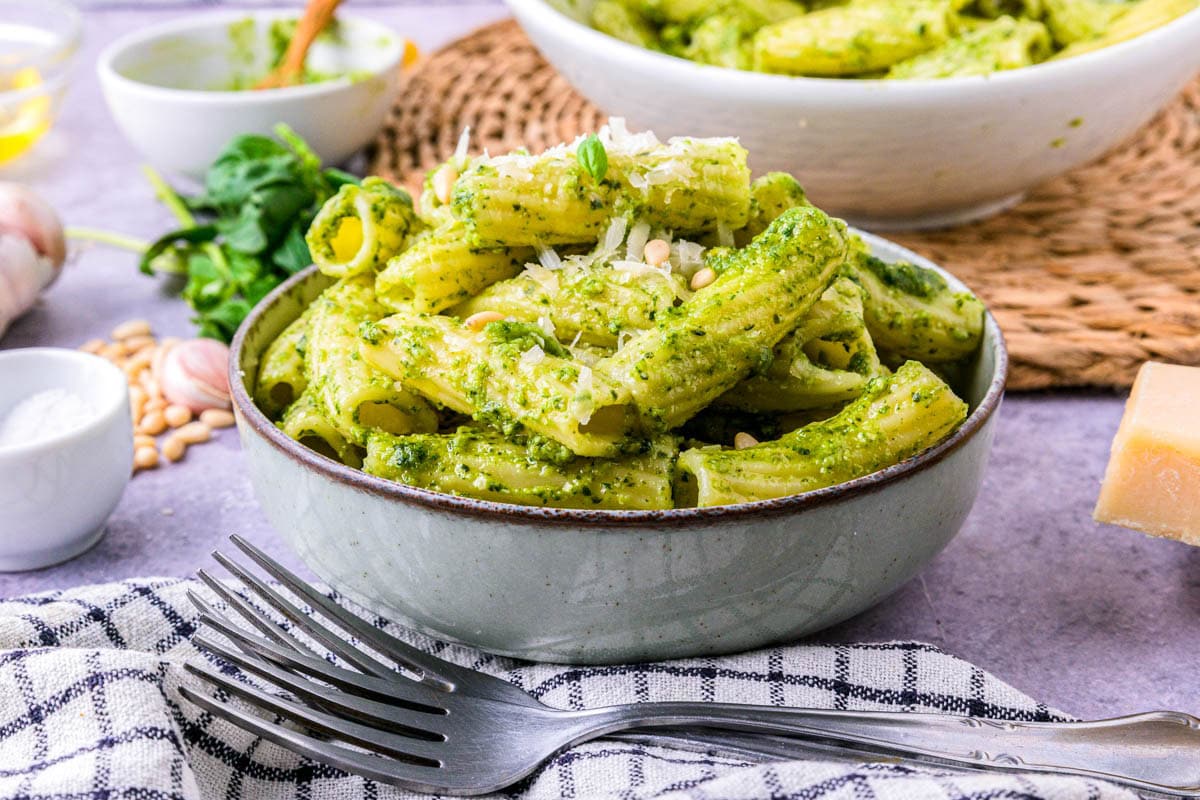
- Serve immediately with a drizzle of olive oil, more grated Parmesan cheese, and a few basil leaves for garnish.
Notes
- For a more traditional version, substitute some of the Parmigiano Reggiano with Pecorino if you can find it.
- Use fresh basil that has vibrant green leaves and no dark spots.
- Trofie, trenette, or straccetti are traditional pasta choices, but you can choose any pasta shape for this recipe. Pasta with nooks and crannies helps the pesto adhere well (rigatoni, penne, fusilli, macaroni, etc.).
- Don’t overcook the pasta. It should be al dente (cooked with a slight bite).
- You can add more garlic if you’re a garlic lover.
- Pasta al pesto can be eaten hot or cold as a pasta salad. If you want to enjoy the pasta cold, rinse the cooked pasta under running water until it reaches room temperature.
Nutrition
This nutritional information has been estimated by an online nutrition calculator. It should be seen as a rough calculation and not a replacement for professional dietary advice.