Almejas a la marinera is a delicious dish from the Spanish region of Galicia. The region is known for its seafood and the countless recipes they have come up with over the centuries to cook fish and seafood.
Almejas a la marinera are essentially clams cooked in a creamy, velvety white wine sauce. It complements the clams beautifully and will have you soaking up every last drop!
You can serve it as a first course or a light main dish with a side of crusty bread.

Ingredients

To make this Spanish clam recipe, you’ll need the following ingredients:
- Clams – You can use any clams of your choice, just make sure they are fresh.
- White onion – The sauce is traditionally made with white onion, but you can use a yellow onion if needed.
- Olive oil – Don’t use another kind of oil since it would impact the flavor of the final dish.
- Corn starch – To thicken the sauce. Alternatively, you can also use all-purpose flour.
- Paprika powder – Adds color and flavor to the sauce. Use sweet or hot paprika depending on your preference. Don’t use too much hot paprika, the dish is not meant to be spicy.
- Garlic cloves – Use fresh garlic; avoid pre-minced garlic or garlic powder for the best taste.
- White wine – The rule of thumb is to choose a white wine that you would drink on its own, but it doesn’t have to be expensive. Opt for a dry or semi-dry white whine.
- Water – To make the corn starch slurry. You’ll also need water to soak the clams.
- Salt – To soak the clams.
- Chives or parsley – For garnish. Optional, but recommended.
Recipe Tips
- Soaking the clams in salted water is crucial since it helps them open and release any sand they may have trapped inside. With cold salted water, we will mimic their living conditions. Don’t skip unless you want to have sandy clams.
- If your tap water contains chlorine, use filtered or bottled water to clean the clams.
- Traditionally, the dish is made with Carril clams, a type of clam from the town of Carril in Galicia, but it can be made with any type of clams. Baby clams are a popular choice.
- You can add whole cayenne peppers for a bit of a spicy kick but don’t add too many (this dish is not meant to be overly spicy) and remove them before adding the clams to the pan.
- Do not eat clams that have not opened during cooking.
- Serve the clams with some crusty bread to soak up the sauce.
Get a Taste of Europe
Join 3000+ readers and get European recipes and family favorites to your inbox every week.
You can unsubscribe anytime. No spam. For more details, review our Privacy Policy.
How to Make Almejas a la Marinera – Step by Step Instructions
If you’re a visual person, have a look at the recipe photos in this section which will show you exactly how to make this Spanish-style clams recipe.

First, add the clams to a bowl with cold, salted water. Cover the bowl and let it sit in the fridge for 30 minutes to 1 hour. This will remove the sand from the clams.

Next, peel the onion and finely dice it. Also peel the garlic cloves and mince them.

In the pan, heat the olive oil over medium heat. Then add the garlic and onion and cook for 5-7 minutes or until golden and fragrant. Stir regularly.
Then reduce the heat to low and mix in the paprika powder.

Dissolve the cornstarch in cold water. Then add the cornstarch slurry and the wine to the pan and mix well. Cook for 5 minutes over medium-low heat.

Drain the clams and then add them to the pan. Cook for 10-15 minutes until the clams open. Stir occasionally.

Garnish the clams with chopped chives or parsley. Then serve them with crusty bread to soak up the delicious sauce. Enjoy!
Storage Tips
Almejas a la marinera should be eaten right after being made while they are still hot.
However, if you have any leftovers, you can store them in a sealed container in the fridge for up to 2 days.
Related Recipes
Here are some other Spanish recipes that you may want to try making at home:
- Empanada Gallega (Savory Galician Pie)
- Arroz Negro (Squid Ink & Seafood Paella)
- Fried Calamari (Spanish Calamares a la Romana)
- Gambas al Ajillo (Spanish Spicy Garlic Shrimp)
- Merluza en salsa verde (Hake in Green Sauce)
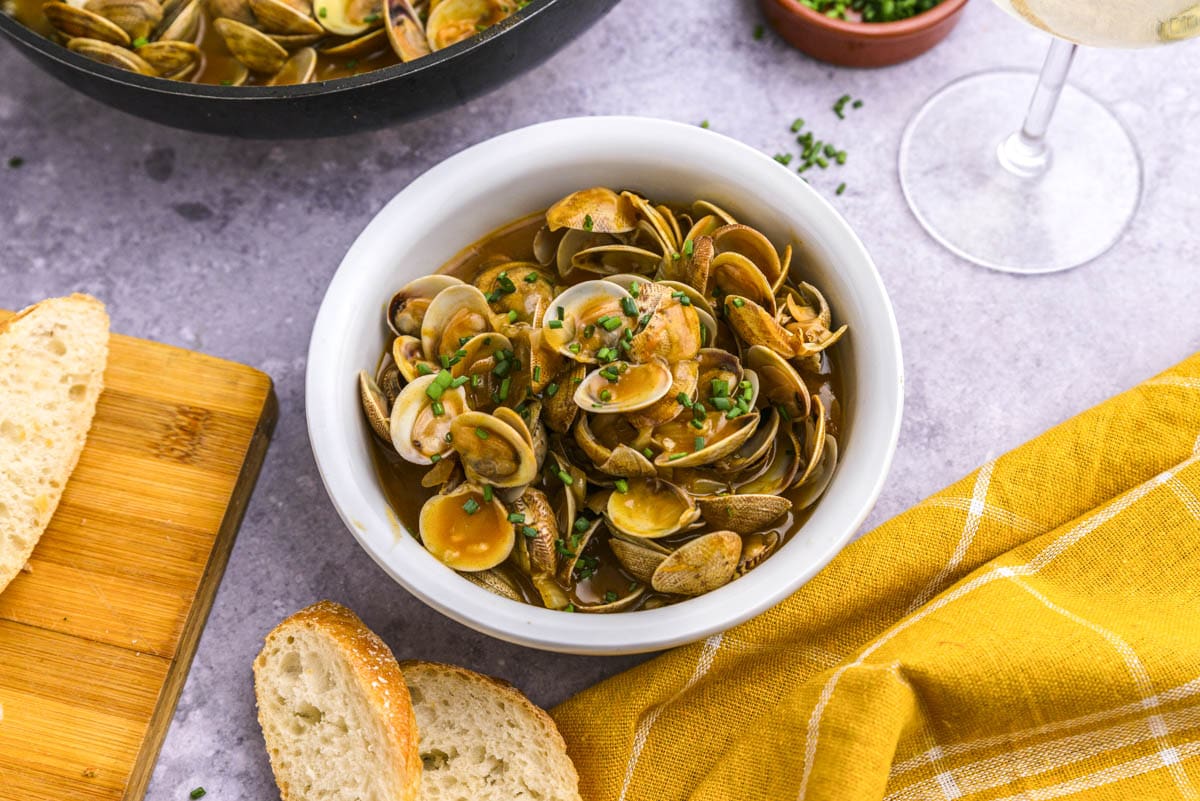
Almejas a la Marinera (Fisherman’s Clams)
Ingredients
- 4 pounds clams
- 1 tablespoon salt
- 1 white onion
- 2 garlic cloves
- 3 tablespoons olive oil
- 2 teaspoons paprika powder, sweet or hot
- 1/2 cup water, cold
- 1 tablespoon cornstarch
- 2 cups white wine
- Chives or parsley , for garnish
Instructions
- Place the clams in a bowl with cold water and salt. Cover the bowl and let it sit in the fridge for 30 minutes to 1 hour.4 pounds clams, 1 tablespoon salt
- Peel the onion and finely dice it. Peel the garlic cloves and mince them.1 white onion, 2 garlic cloves
- In the pan, heat the olive oil over medium heat. Then add the garlic and onion and cook for 5-7 minutes or until golden and fragrant. Stir regularly.3 tablespoons olive oil
- Reduce the heat to low and mix in the paprika powder.2 teaspoons paprika powder
- Dissolve the cornstarch in cold water.1/2 cup water, 1 tablespoon cornstarch
- Add the wine and the cornstarch slurry to the pan and mix well. Cook for 5 minutes over medium-low heat.2 cups white wine
- Drain the clams and then add them to the pan. Cook for 10-15 minutes until the clams open. Stir occasionally.
- Garnish with chopped chives or parsley. Then serve with crusty bread to soak up the delicious sauce.Chives or parsley
Notes
- Soaking the clams in salted water is crucial since it helps them open and release any sand they may have trapped inside. Don’t skip unless you want to have sandy clams.
- If your tap water contains chlorine, use filtered or bottled water to clean the clams.
- Traditionally, the dish is made with Carril clams, a type of clam from the town of Carril in Galicia, but it can be made with any type of clams. Baby clams are a popular choice.
- Use a white wine you would drink on its own, but it doesn’t have to be expensive. Opt for a dry or semi-dry white whine.
- You can add whole cayenne peppers for a spicy kick but don’t add too many (this dish is not meant to be overly spicy) and remove them before adding the clams to the pan.
- Do not eat clams that have not opened during cooking.
Nutrition
This nutritional information has been estimated by an online nutrition calculator. It should be seen as a rough calculation and not a replacement for professional dietary advice.