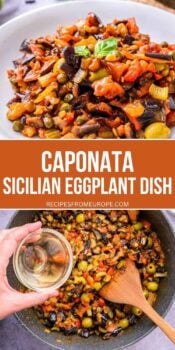
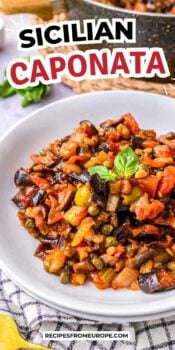
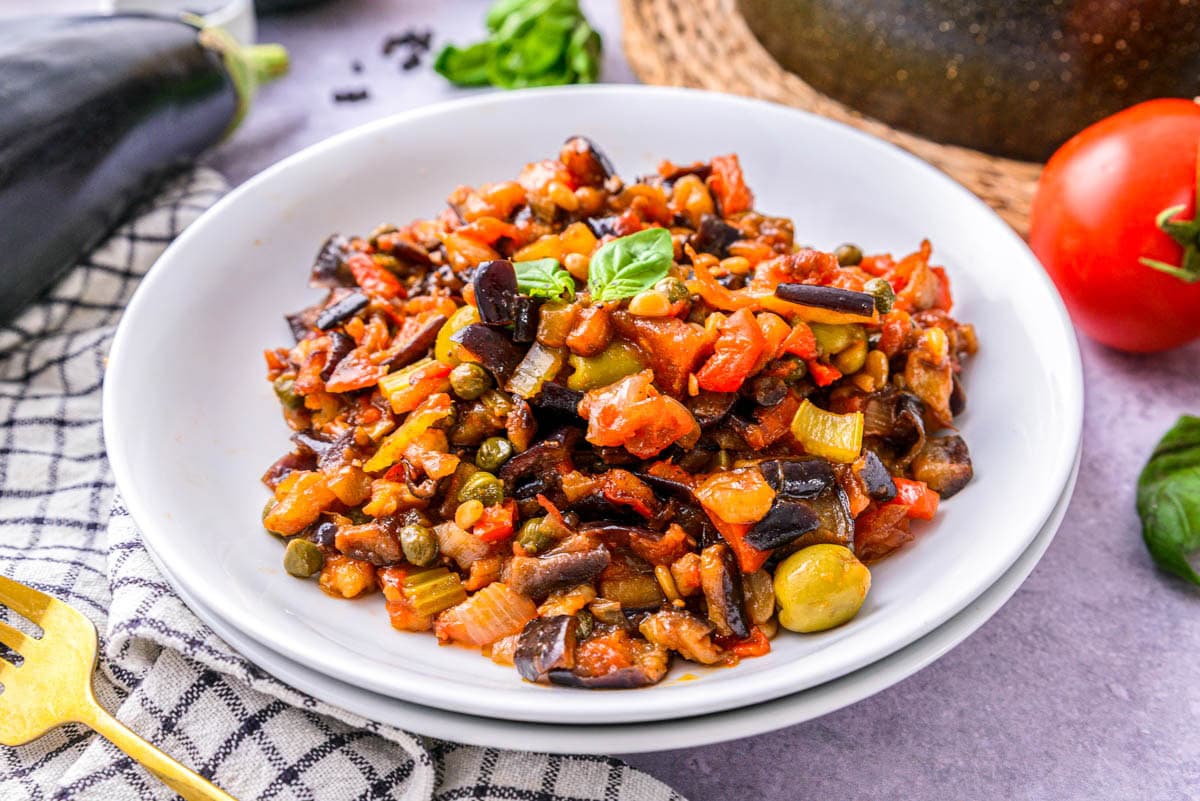
Caponata is a classic sweet-and-sour vegetable dish from Sicily in southern Italy. It’s made with eggplant and other vegetables like celery, onion, and tomato, as well as capers and green olives.
It’s packed with delicious Mediterranean flavors and traditionally served at room temperature or cold. You can enjoy it as a side dish alongside meat or fish, but it’s also great as a light lunch or as an appetizer spooned onto toasted bread (like a caponata bruschetta).
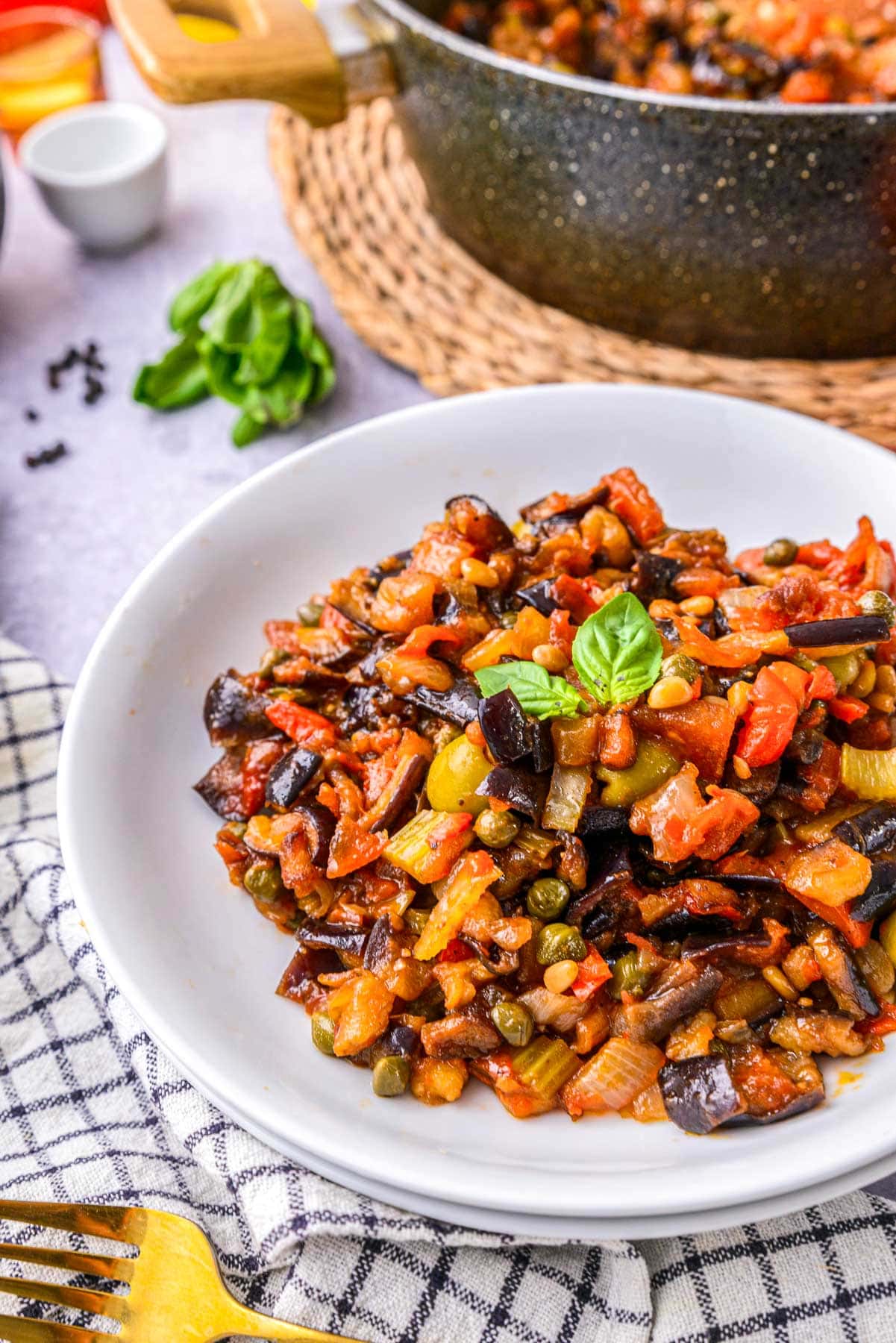
Some versions include bell pepper and fresh basil (like I used here), but those are optional. Raisins are also a common ingredient in some recipes.
The key to a good caponata is achieving the right balance between sweet and sour flavors and cooking the vegetables until the dish is rich and tender, without being soupy or overcooked. Since preferences can vary quite a bit, feel free to adjust the sugar and vinegar to your liking.
Ingredients
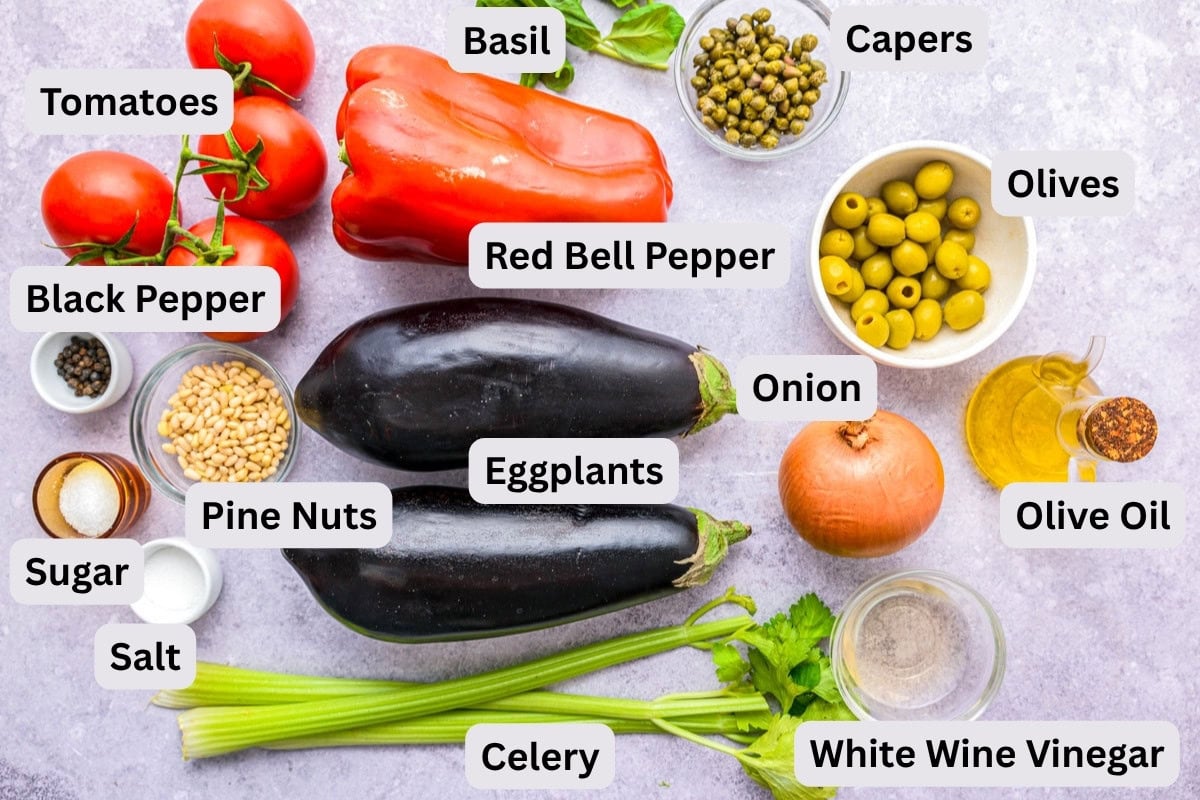
- Eggplants – Either black, white, or striped will work. Just make sure to choose eggplants that are firm (a sign of freshness).
- Celery stalks – It’s included for flavor and texture.
- Yellow onion – A white onion also works.
- Red bell pepper – Some versions of caponata don’t include it, others include other colors of bell pepper. I like to include red bell pepper for sweetness and contrast of colors.
- Tomatoes – Any variety can work, just choose ripe and juicy tomatoes. If you can’t find good fresh tomatoes, you can use canned tomatoes and tomato paste.
- Green olives – Pitted. You can use any variety you like, but I wouldn’t use any strongly flavored olives, so they don’t interfere with the flavor of the final dish.
- Capers – If using salted capers (which are common in Italy), just make sure to rinse them under running water to remove the excess salt. Capers in brine also work well.
- Pine nuts – Expensive but worth it. Could be substituted with walnuts.
- White wine vinegar – Use a good-quality white wine vinegar and adjust the amount to taste.
- Sugar – Regular granulated sugar works well.
- Salt – Enhances the overall flavor. Adjust the amount to taste.
- Black pepper – Use freshly cracked pepper for the best taste.
- Olive Oil – For cooking the vegetables. You can also use a neutral-tasting seed oil for the eggplants if you prefer.
- Basil – Fresh basil is the way to go. I like to include it at the end when the dish is at least room temperature for garnish and aroma, but some people like to include it during cooking.
Recipe Tips
- Don’t skip the salting step. It helps release excess moisture from the eggplant so it becomes less spongy and absorbs less oil during frying (and will splatter less). It can also help reduce the bitterness in the eggplant, but this isn’t usually an issue with current-day eggplants anymore.
- Fry the eggplant in batches if needed. Overcrowding the pan can prevent the eggplant from browning.
- If frying the eggplant in olive oil is too much of a splurge, you can fry it in neutral oil (e.g. sunflower or vegetable oil), and then switch to olive oil to cook the rest of the ingredients.
- Go easy on the sugar and vinegar at first. I prefer to add a bit, mix well, and then taste to check the flavor. Work in increments until you find the right spot for you.
- Some recipes combine the vinegar and the sugar before adding them to the pan, but adding them separately gives you more control over the final flavor.
Get a Taste of Europe
Join 3000+ readers and get European recipes and family favorites to your inbox every week.
You can unsubscribe anytime. No spam. For more details, review our Privacy Policy.
How to Make Caponata – Step-by-Step Instructions
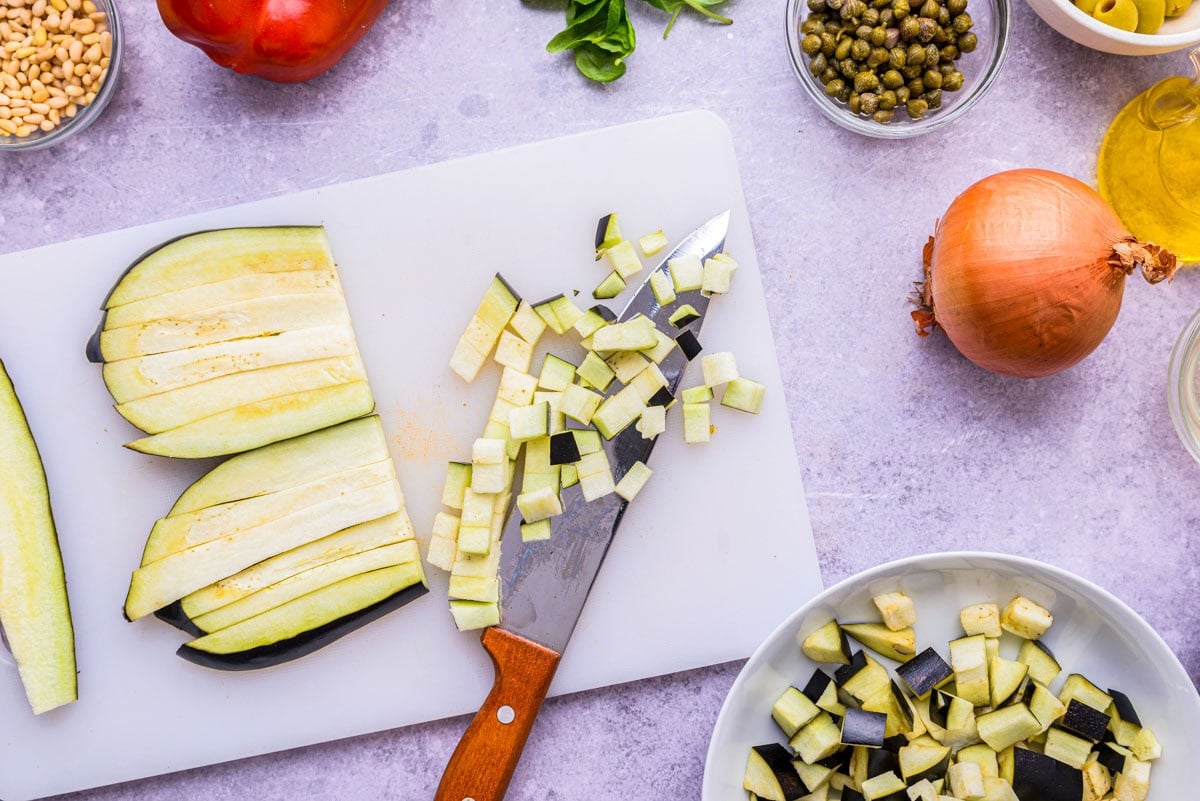
First, rinse and dry the eggplant. Then dice it into small cubes and add them to a large bowl. Sprinkle with salt, toss well, and cover with a plate.
Place something heavy on top and set it aside. The salt will help draw out excess moisture and bitterness.
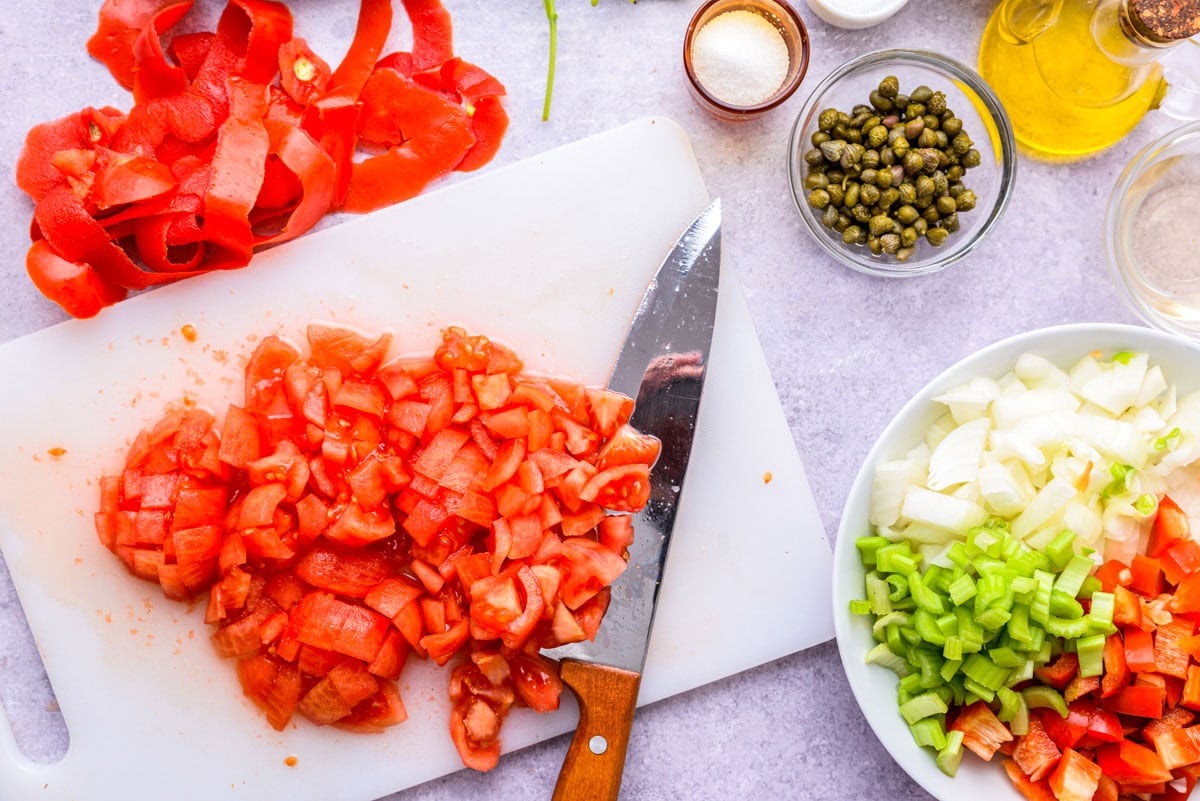
Meanwhile, dice the onion, bell pepper, and celery. Also, peel and dice the tomatoes, keeping as much of their juices as possible. Set aside.
Also, if you’re using salted capers, rinse them under running water and set aside.
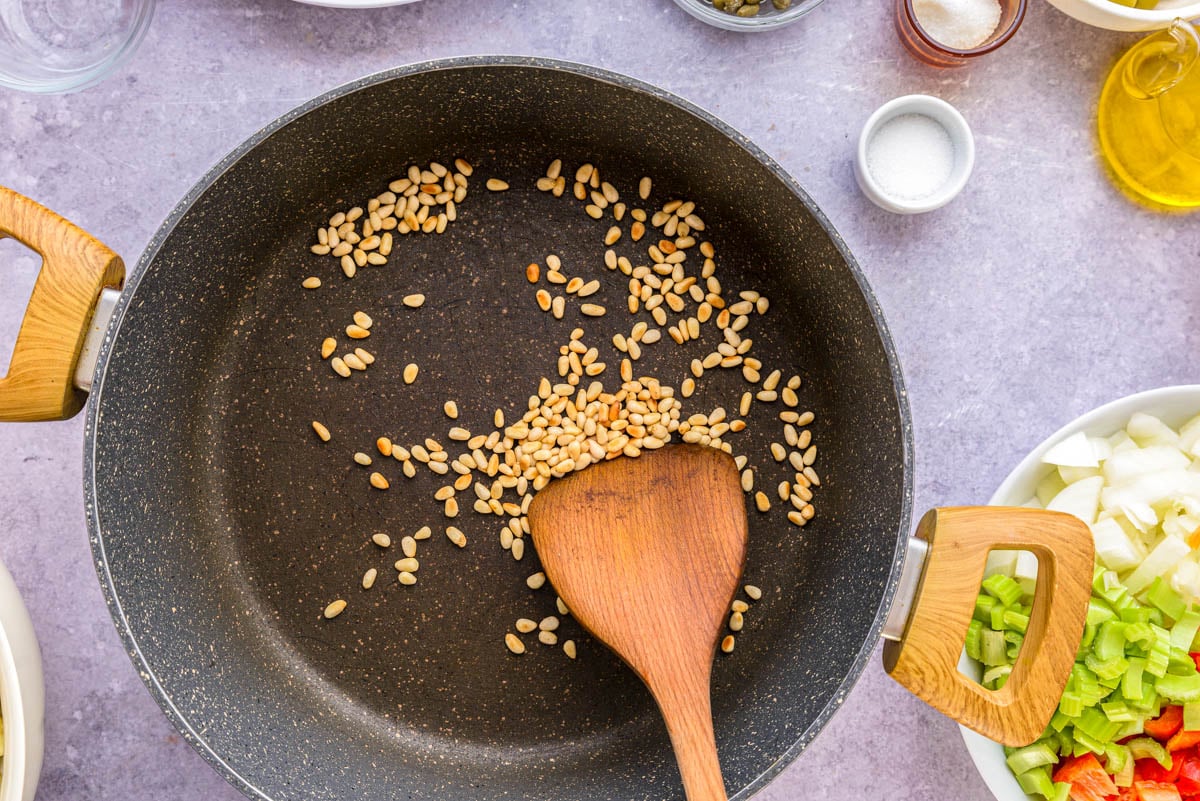
Toast the pine nuts in a large pan over medium heat, stirring frequently, until golden and fragrant. Then remove and set aside.
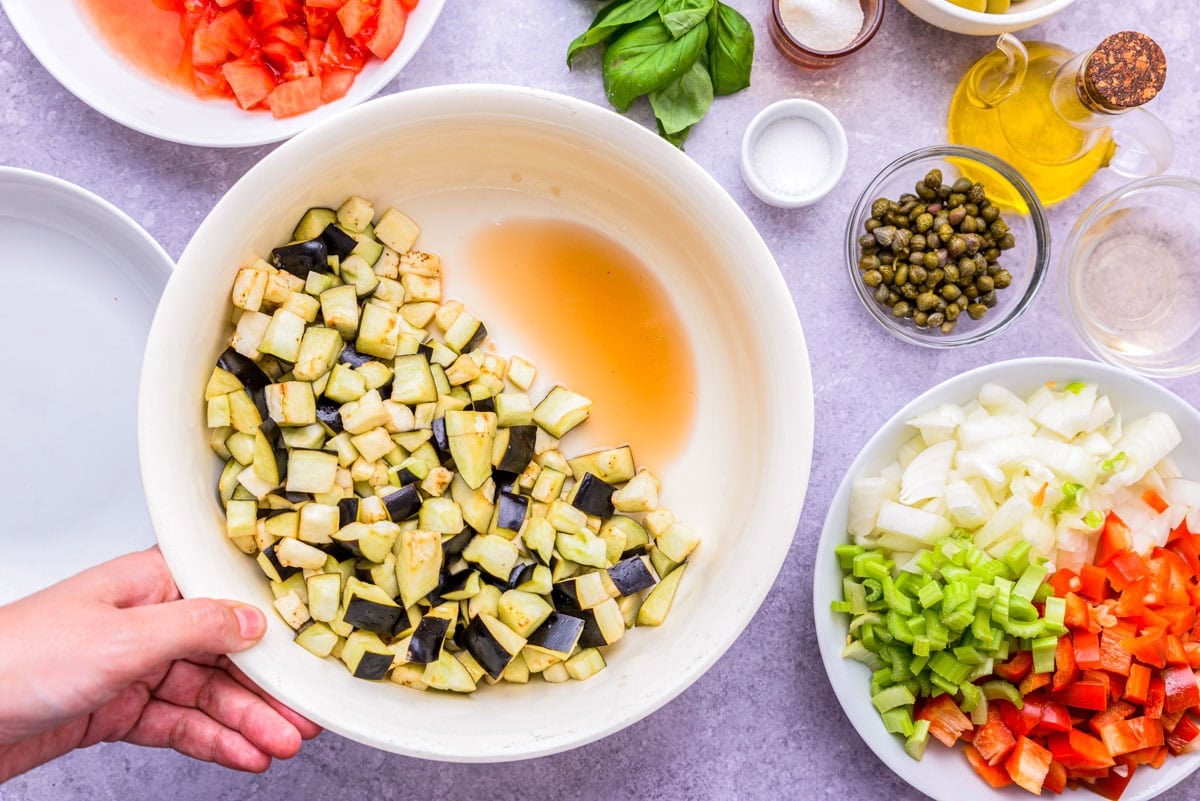
Rinse the salted eggplant under cold water, drain, and pat dry gently.
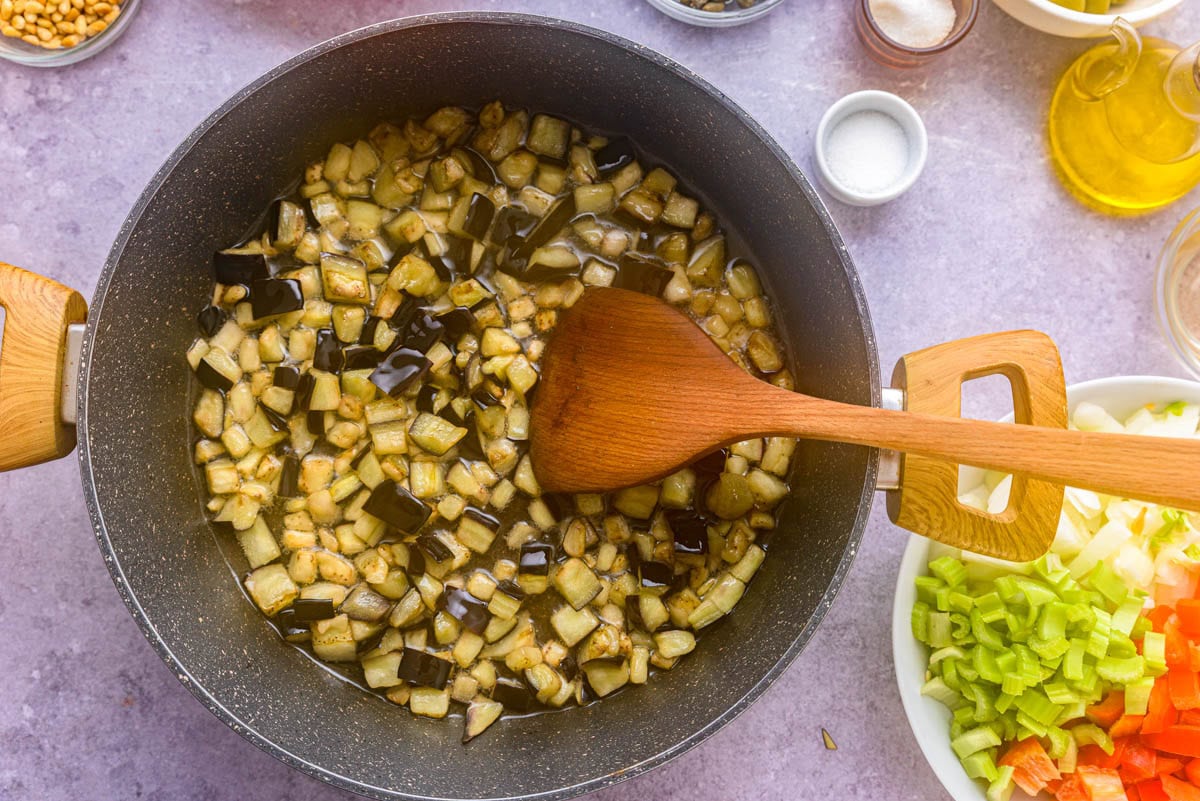
Add enough olive oil to the large pan to lightly fry the eggplant over medium heat. When it’s hot, add the eggplant cubes and cook until golden brown, stirring occasionally.
Work in batches if needed to avoid overcrowding the pan. Transfer the cooked eggplant to a bowl and set aside.
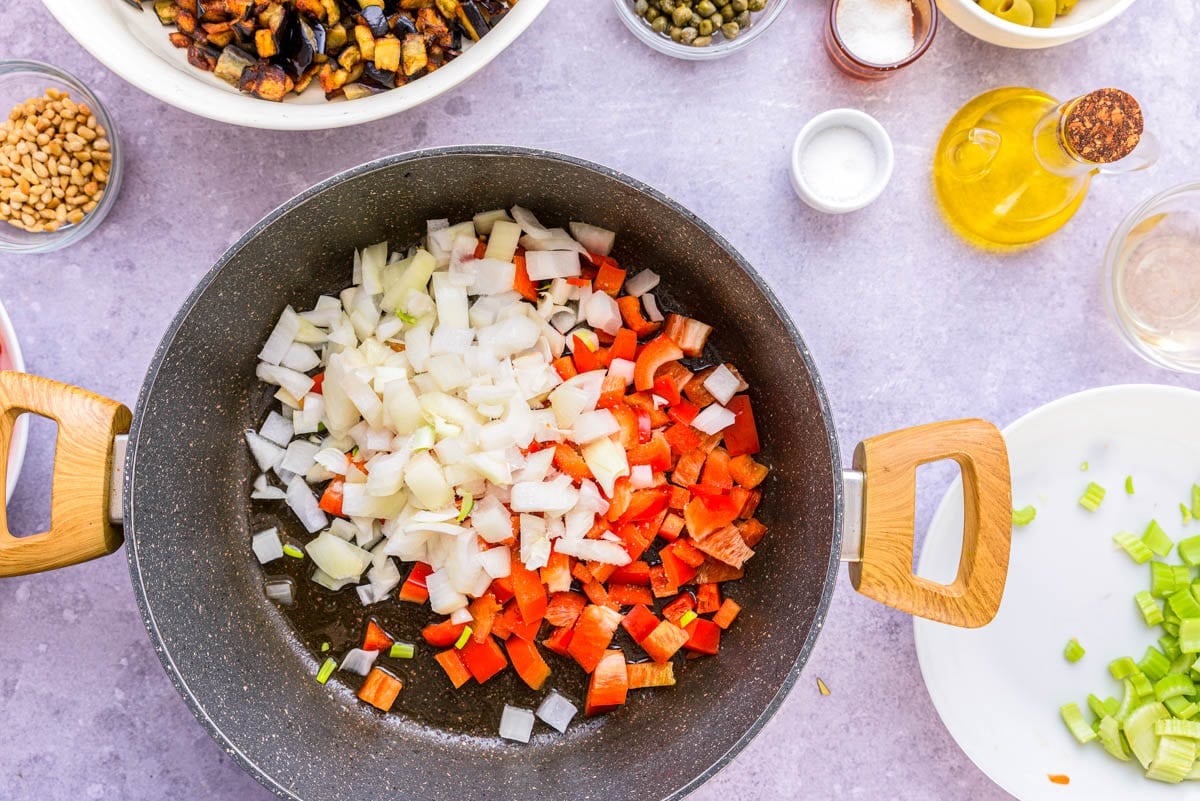
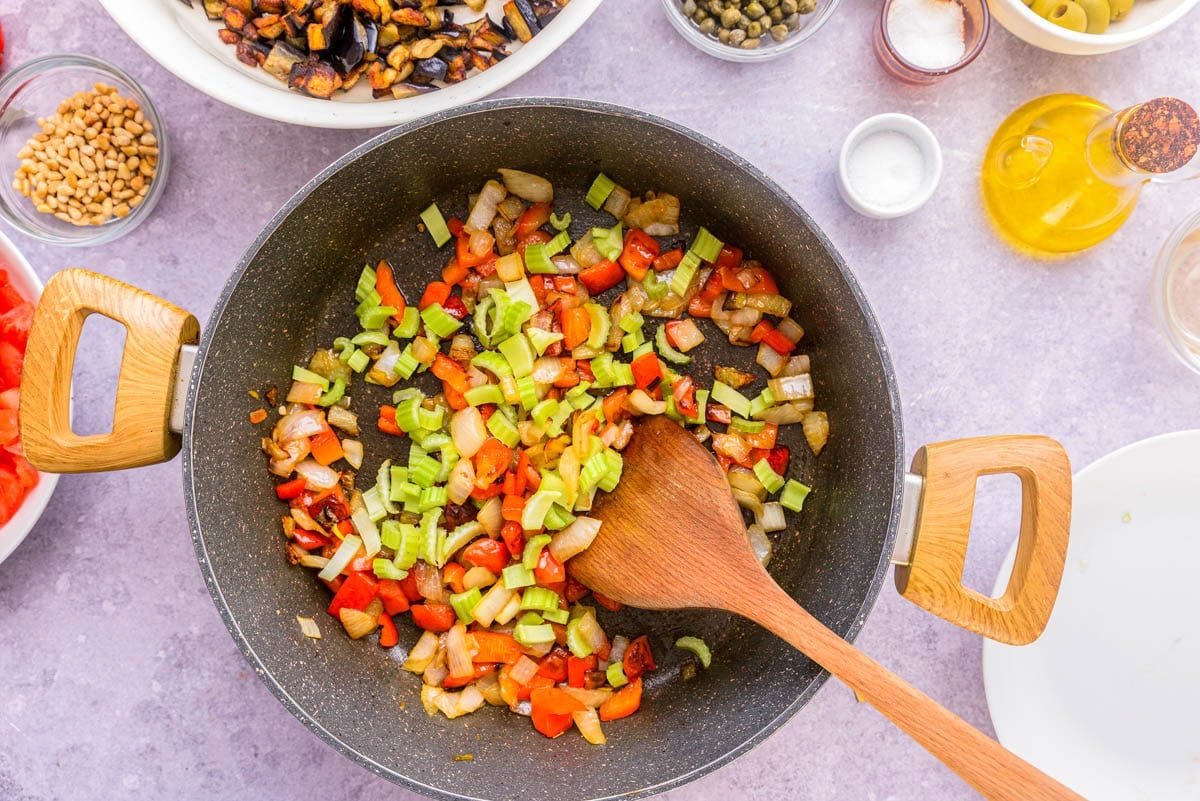
Carefully remove most of the olive oil from the pan, leaving about 1 tablespoon behind.
Add the diced onion and bell pepper to the pan, and cook over medium heat until soft, golden, and fragrant (about 5 minutes). Stir regularly. Then add the celery and cook for another minute.
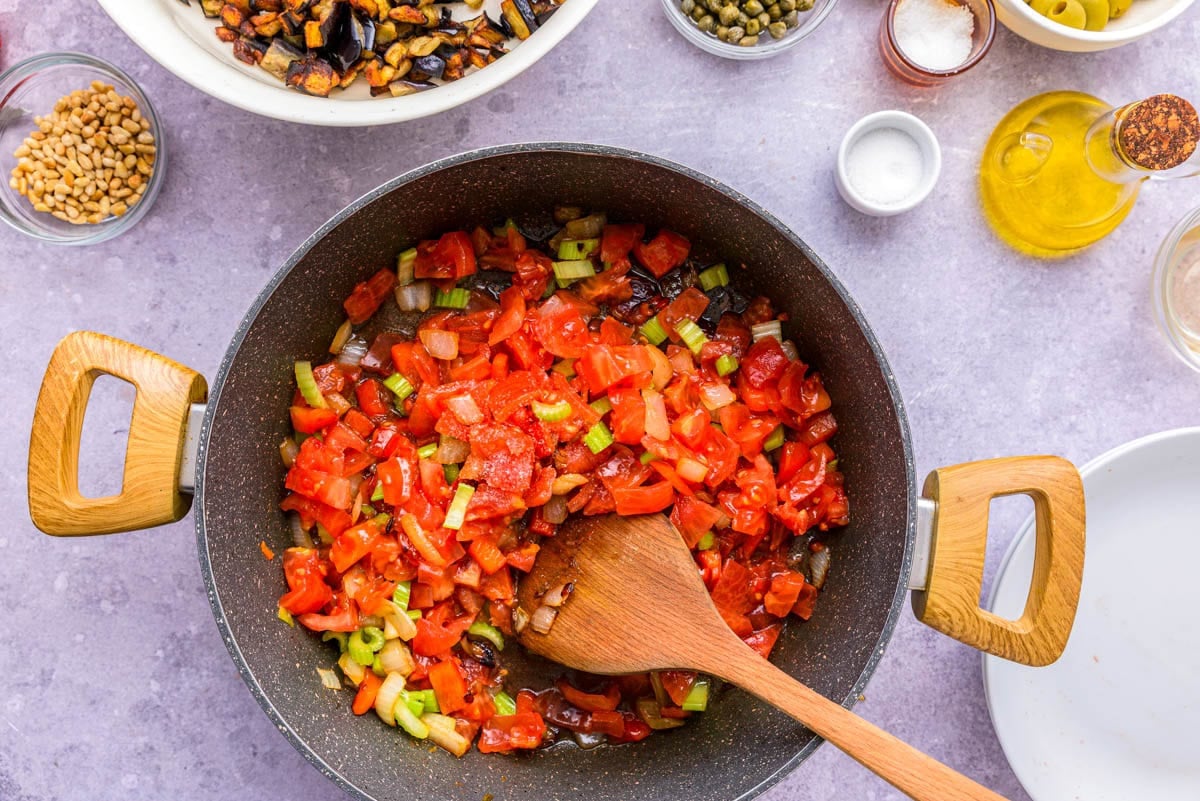
Next, add the diced tomatoes and mix well. Gently press the diced tomatoes with a spatula or spoon to help them break down and create a sauce.
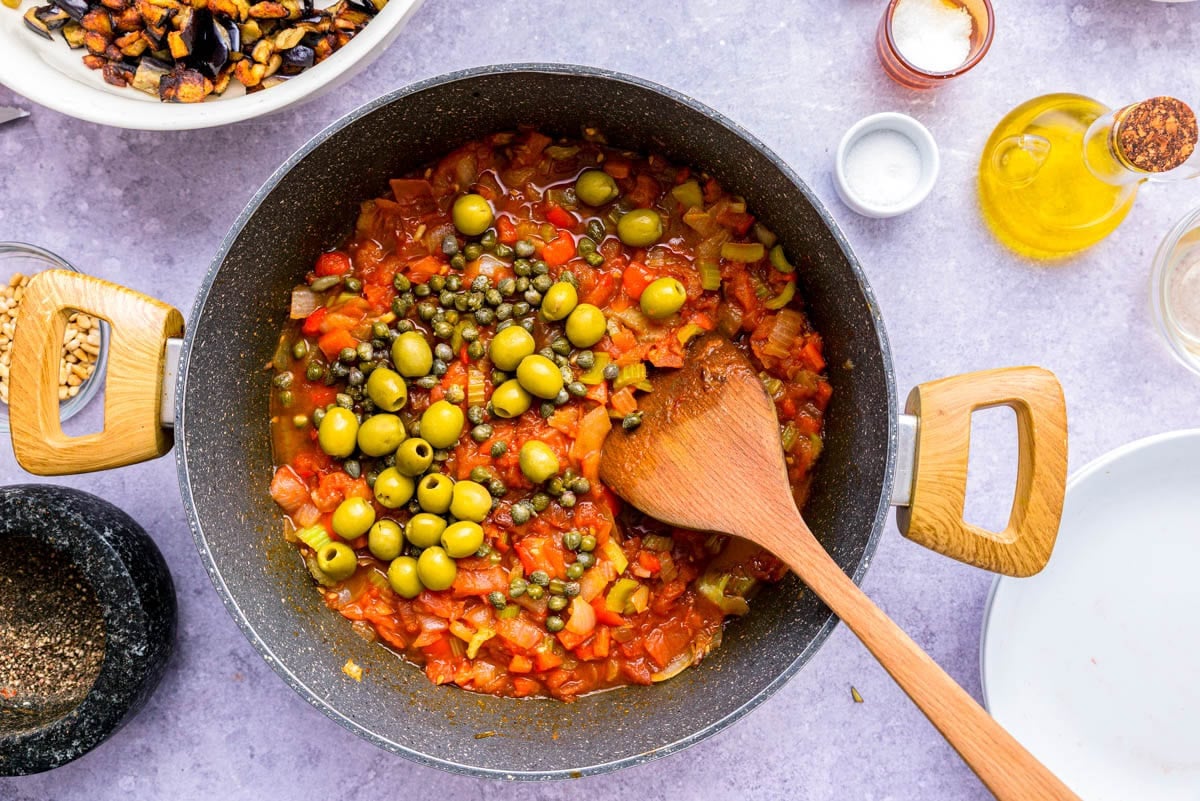
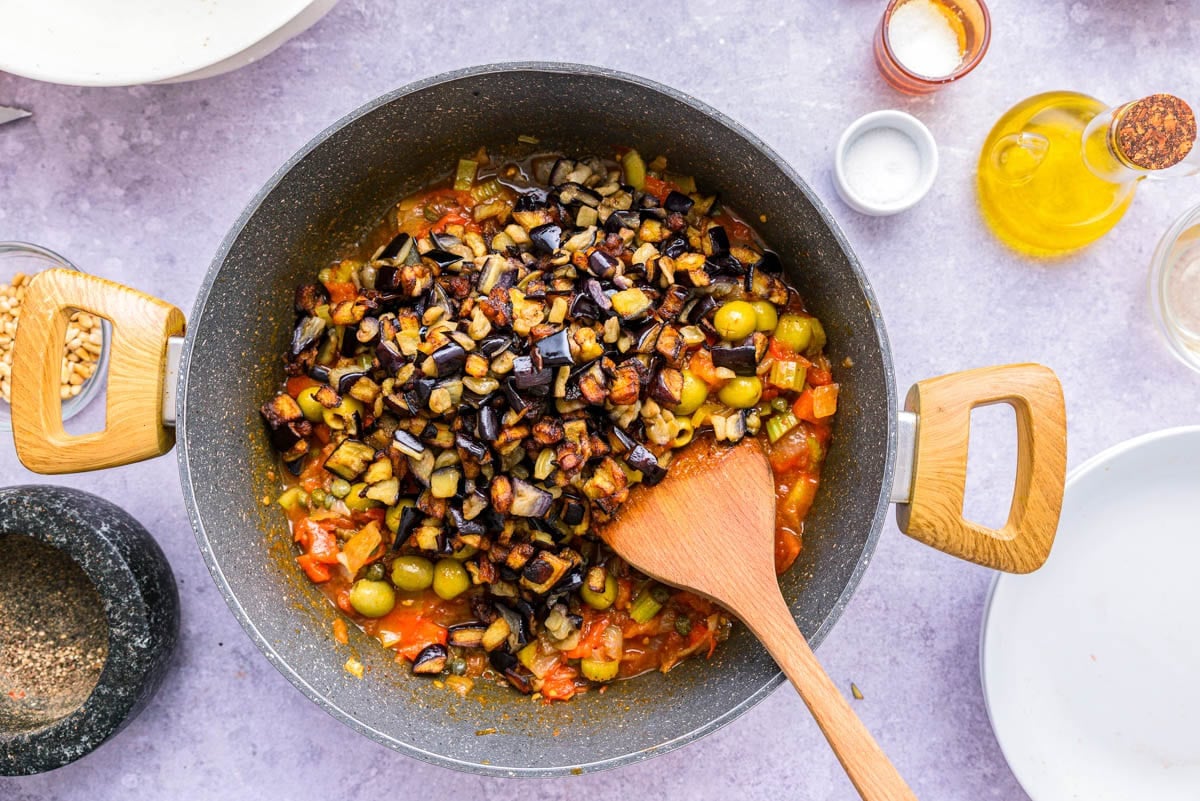
Now add the olives and capers to the pan. Stir well, then add the cooked eggplant and toasted pine nuts. Stir again.
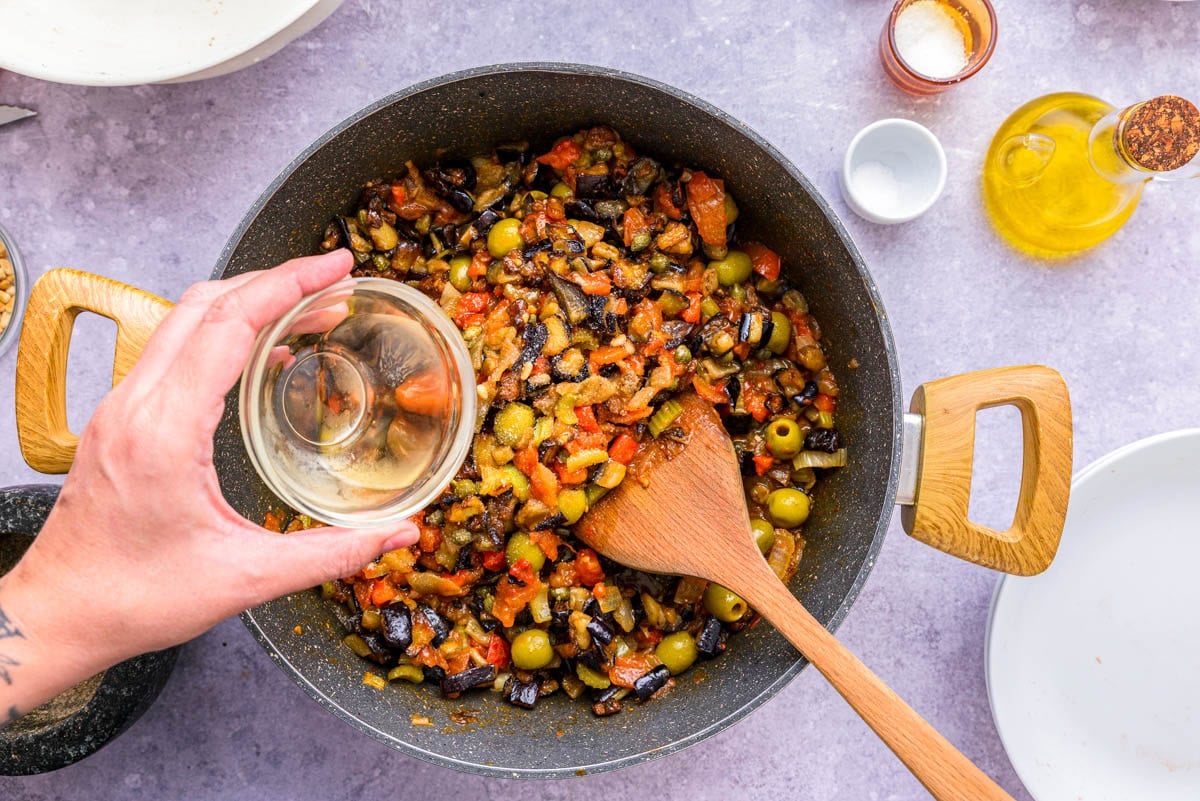
Add the vinegar and sugar. Season with salt and black pepper to taste. Mix well and add some of the water to the pan if the mixture seems dry.
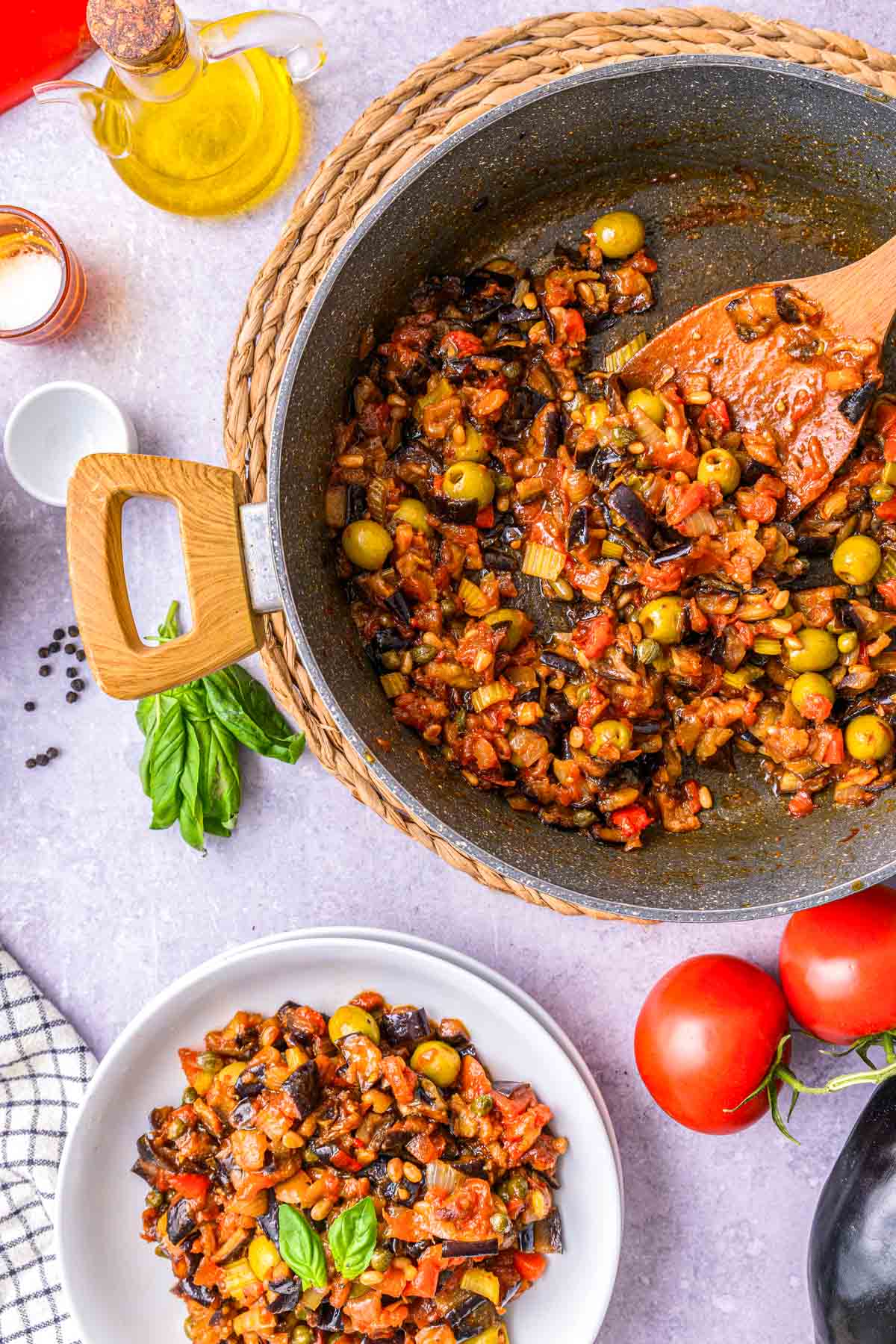
Cook over medium-low heat for 10-15 minutes, stirring occasionally, until the vegetables are tender and most of the liquid has evaporated. Then taste and adjust the salt, pepper, sugar, or vinegar to your liking.
Transfer the caponata to a serving bowl and let it cool to room temperature before serving, or chill it in the fridge and then serve. Garnish with fresh basil before serving (optional). Enjoy!
Storage Tips
If you have leftover caponata, you can store it in a sealed container in the fridge for up to 4 days.
Related Recipes
Here are some more Italian recipes you can also try:
Ingredients
- 2 medium eggplants, (about 2 pounds / 900 grams total)
- ½ tablespoon salt, plus more to taste
- 1 large yellow onion
- 1 medium red bell pepper, or 1/2 large bell pepper
- 3 small small celery stalks, or 2 large
- 2 tablespoons capers
- ⅓ cup pine nuts
- olive oil, for frying
- 4 ripe tomatoes
- ½ cup green olives, pitted
- ½ cup wine vinegar
- 2 tablespoons granulated sugar
- 1 cup water, if needed (approximately)
- black pepper, to taste
- fresh basil, for garnish (optional)
Instructions
- Rinse and dry the eggplants. Then dice them into small cubes and place them in a large bowl. Sprinkle with salt, toss well, and cover with a plate. Place something heavy on top of the plate and set the bowl aside.2 medium eggplants, ½ tablespoon salt
- Meanwhile, dice the onion, bell pepper, and celery. Also, peel and dice the tomatoes, and try to keep as much of their juices as possible. Set aside separately.1 large yellow onion, 1 medium red bell pepper, 3 small small celery stalks, 4 ripe tomatoes
- If using salted capers, rinse them under running water.2 tablespoons capers
- In a large pan over medium heat, toast the pine nuts until golden and fragrant. Stir frequently so they don't burn. Then remove them from the pan and set aside.⅓ cup pine nuts
- Rinse the salted eggplant under cold water, then drain and pat dry gently.
- Add enough olive oil to the large pan to lightly fry the eggplant over medium heat. Once hot, add the eggplant cubes and cook until golden brown, stirring occasionally. Work in batches if needed to avoid overcrowding the pan.olive oil
- Transfer the cooked eggplant to a bowl and set aside.
- Carefully remove most of the olive oil from the pan, leaving about 1 tablespoon behind. Add the diced onion and bell pepper to the pan, and cook over medium heat until soft, golden, and fragrant (about 5 minutes). Stir regularly.
- Add the celery and cook for another minute.
- Add the diced tomatoes and mix well. Gently press the diced tomatoes with a spatula or spoon to help them break down and create a sauce.
- Add the olives and capers to the pan. Stir well, then add the cooked eggplant and toasted pine nuts. Stir again.½ cup green olives
- Add the vinegar and sugar. Season with salt and black pepper to taste. Mix well and add some of the water to the pan if the mixture seems dry.½ cup wine vinegar, 2 tablespoons granulated sugar, 1 cup water
- Cook over medium-low heat for 10-15 minutes, stirring occasionally, until the vegetables are tender and most of the liquid has evaporated. Taste and adjust the salt, pepper, sugar, or vinegar to your liking.
- Transfer the caponata to a serving bowl and let it cool before serving, or chill it in the fridge and then serve. Garnish with fresh basil before serving (optional).fresh basil
Notes
- You can use black, white, or striped eggplant. Just make sure to choose eggplants that are firm (a sign of freshness).
- Don’t use strongly flavored olives, so they don’t interfere with the flavor of the final dish.
- Don’t skip the salting step. It helps release excess moisture from the eggplant so it becomes less spongy and absorbs less oil during frying (and will splatter less). It can also help reduce the bitterness in the eggplant, but this isn’t usually an issue with current-day eggplants anymore.
- Fry the eggplant in batches if needed. Overcrowding the pan can prevent the eggplant from browning.
- If frying the eggplant in olive oil is too much of a splurge, you can fry it in neutral oil (e.g. sunflower or vegetable oil), and then switch to olive oil to cook the rest of the ingredients.
- Go easy on the sugar and vinegar at first. Add a bit, mix well, and then taste to check the flavor. Work in increments until you find the right balance for you.
Nutrition
This nutritional information has been estimated by an online nutrition calculator. It should be seen as a rough calculation and not a replacement for professional dietary advice.