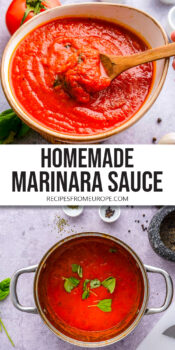
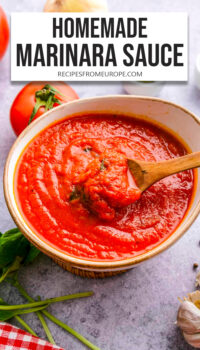
Marinara sauce is a classic Italian tomato-based sauce used in many recipes. In fact, it can be used in pizza, pasta, lasagna, or other lasagna-esque recipes like eggplant parmesan.
It’s super easy to make and it makes a difference when it’s homemade. This version of marinara sauce is considered one of the classics.
I like to include onions to balance the acidity of the tomato sauce with their sweetness and garlic to add a nice layer of delicious flavor.

There are a few variations, depending on the region and the cook. For example, some include onions and some do not, some swear garlic doesn’t belong, but many others include it.
In general, marinara sauce is a versatile recipe worth knowing how to make at home!
Ingredients
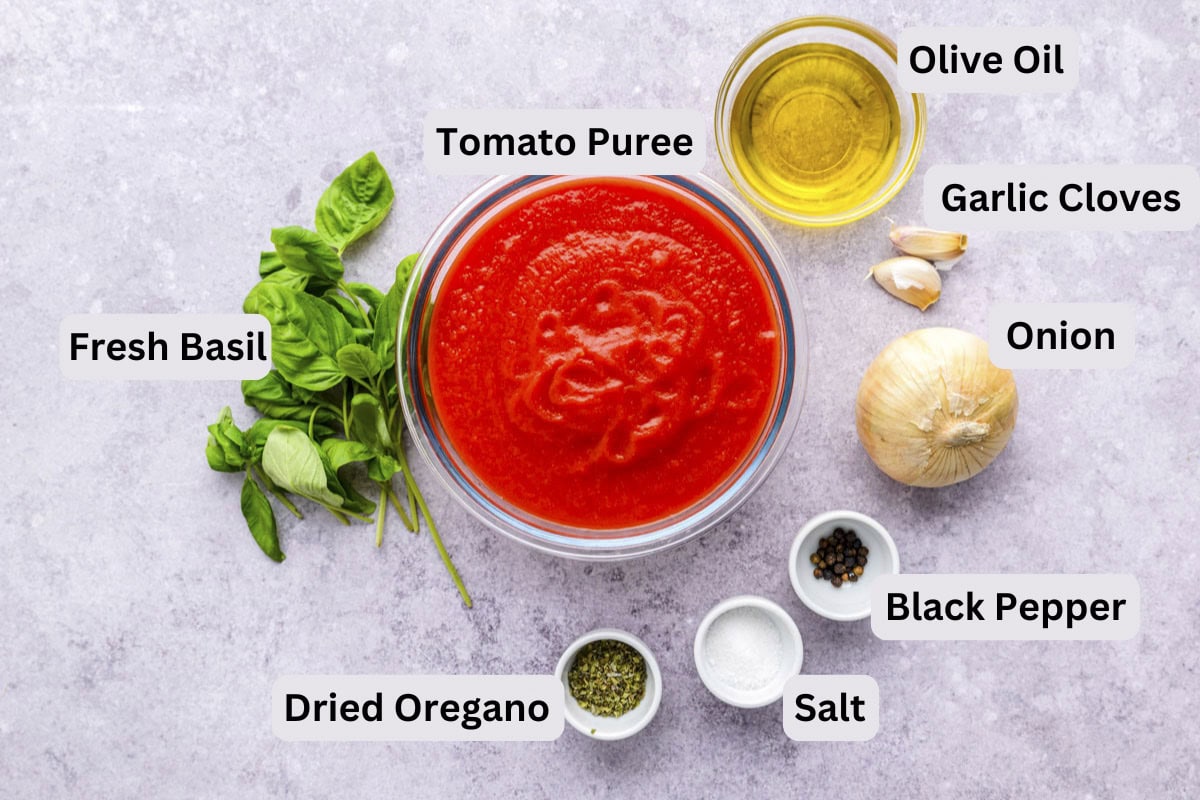
Here are the marinara sauce ingredients you’ll need to make this recipe:
- Canned tomato puree or freshly grated tomato pulp – Using homemade tomato pulp or canned tomato puree will give great results. Homemade tomato pulp tends to make the sauce paler in color.
- Garlic cloves – Fresh garlic cloves; don’t peel them.
- Extra virgin olive oil – Use a good quality extra virgin olive oil if possible. Alternatively, feel free to use non-extra virgin olive oil, but don’t use another type of oil since it would change the flavor of the sauce too much.
- White onion – Or a yellow onion; some people don’t include onion so feel free to skip if you don’t like it.
- Dried oregano – A classic ingredient in marinara sauce.
- Fresh basil – Use fresh basil if possible. Alternatively, you could also add some fresh parsley.
- Salt – Enhances the overall flavor of the sauce; adjust to taste.
- Black pepper – Preferably freshly cracked pepper for the best taste.
Recipe Tips
- If using homemade pulp, choose ripe, plump large tomatoes. If using store-bought canned tomato puree, make sure it’s just tomatoes and salt (no other ingredients). This lets you control the flavors.
- Some people don’t add onion to marinara sauce, but I find it balances the acidity of the tomatoes. Be sure to cook the onions long enough until they’re golden brown and fragrant.
- Using the garlic cloves whole with the skin on ensures the most flavor. It’s also easier to remove them at the end (for picky eaters). The garlic skin has a lot of flavor, and sauteeing it with the skin on protects the garlic cloves and prevents burning.
- Traditionally, marinara sauce is made with oregano and basil, but some recipes also include parsley. You can use any of the three you have on hand. Avoid other herbs, it would change the flavor too much.
- Traditional marinara recipes often include freshly cracked black pepper. The sauce should be aromatic and well-balanced, but not spicy. Add pepper to taste, but don’t overdo it.
- Marinara sauce needs time to develop the flavors, so don’t rush it. Cook on low heat with a lid on and stir occasionally to ensure it does not burn. Add the basil at the end to keep it fresh.
Get a Taste of Europe
Join 3000+ readers and get European recipes and family favorites to your inbox every week.
You can unsubscribe anytime. No spam. For more details, review our Privacy Policy.
How to Make Marinara Sauce – Step by Step Instructions
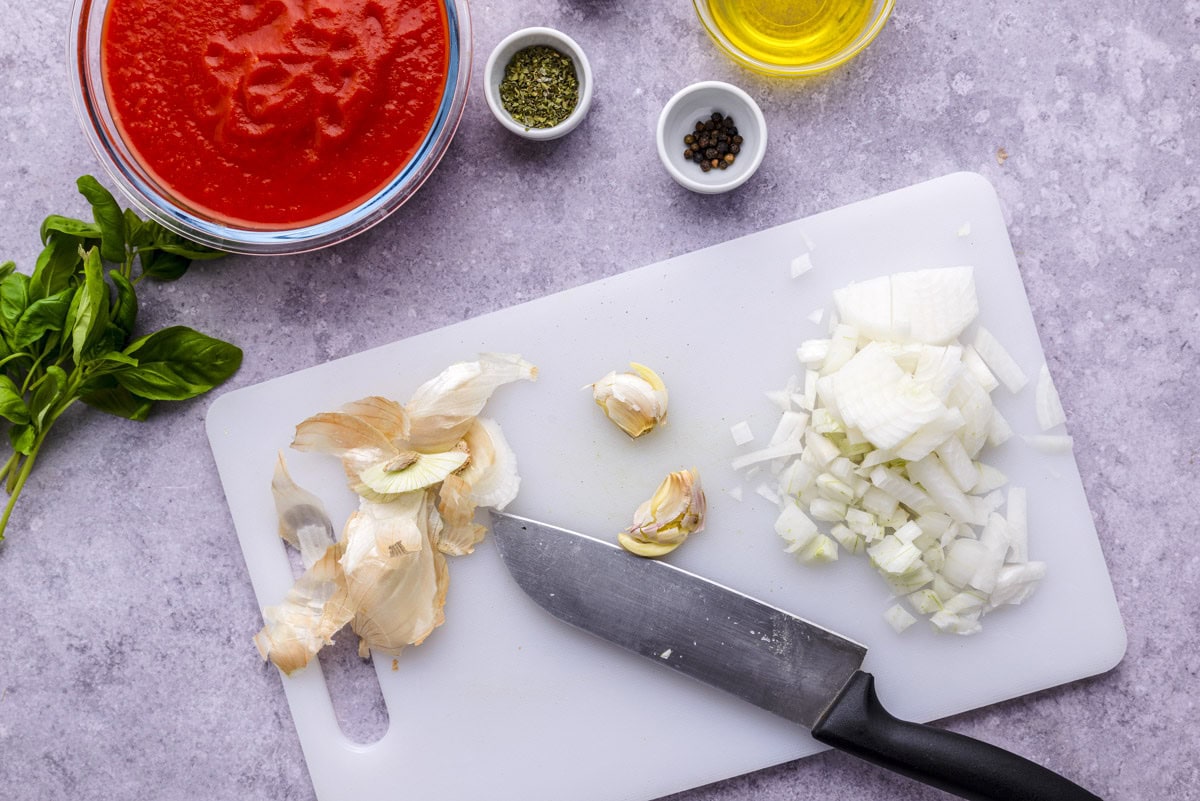
Start by peeling and dicing the onion and crushing the garlic cloves. For the garlic cloves, cut a slit on the side and press them against the cutting board with the flat side of a knife. Leave the peel on.
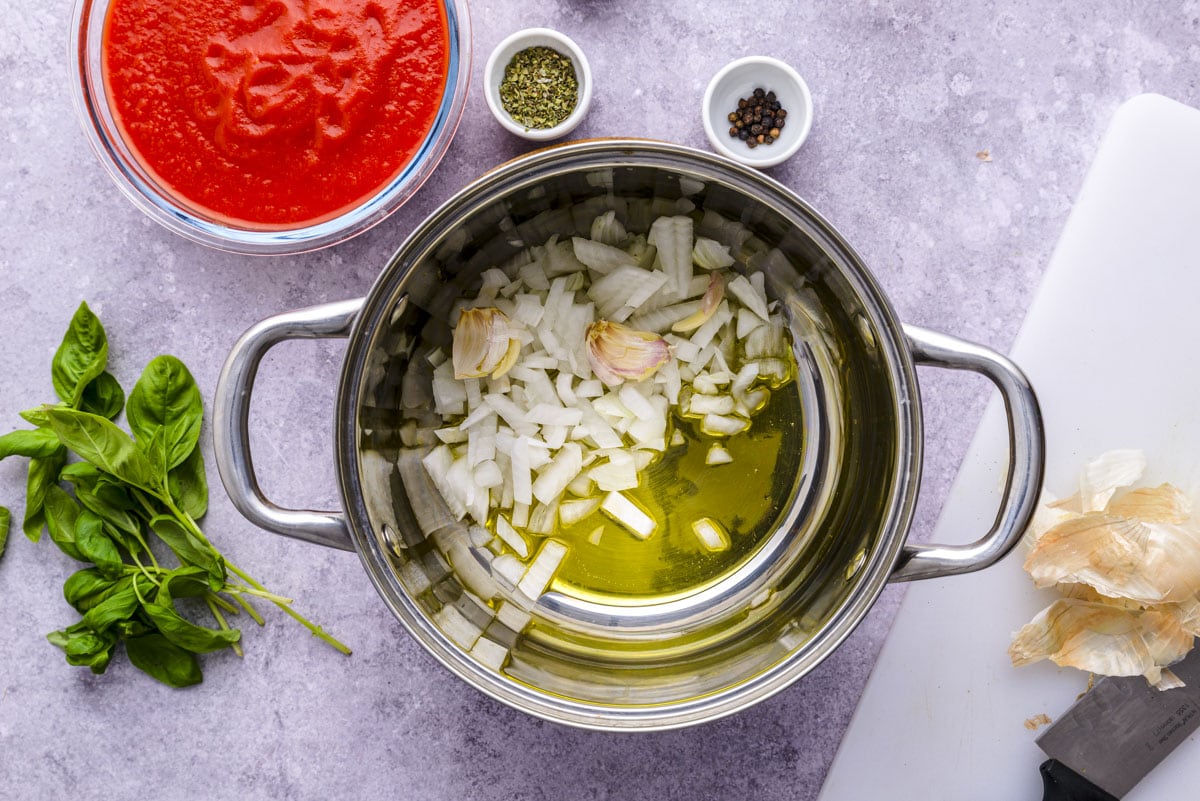
To a pot or saucepan, add the extra virgin olive oil, the crushed garlic and the diced onion.
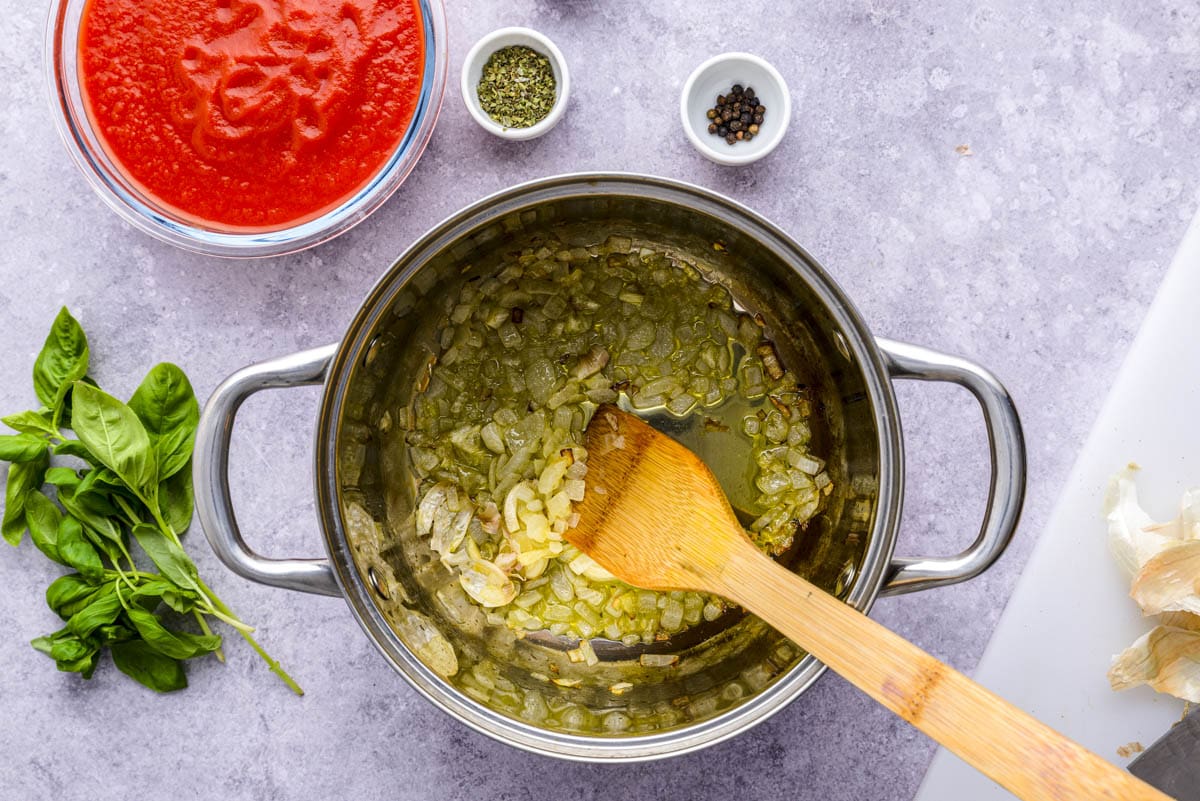
Sautee the onion and garlic over medium heat until golden and fragrant, stirring regularly. If the garlic peels loosen, remove them; if they remain attached to the garlic cloves, leave them.

Add the tomato puree to the pot and season with salt, freshly crushed black pepper and dried oregano.
Cover the pot with a lid and cook over low heat for about 25 minutes, stirring occasionally. (The sauce splatters all over, so I cover it with a lid.)

At this point, add the hand-torn basil leaves, mix well and cook for another 5 minutes.
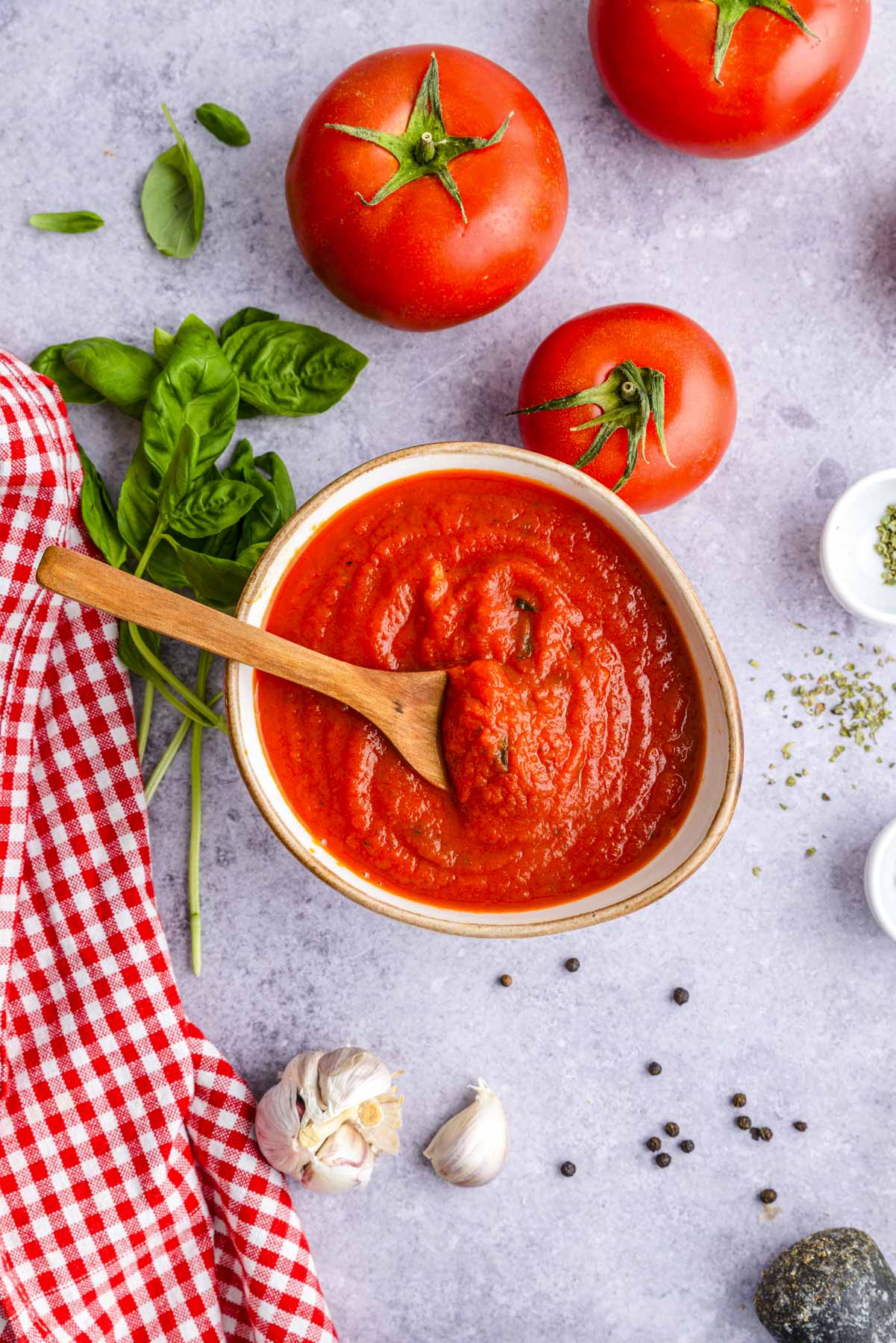
Serve the sauce with your favorite pasta or allow it to cool and store it in the refrigerator or freezer for later use. Enjoy!
Storage Tips
Marinara sauce can be stored in sealed containers in the fridge for up to 5 days.
Alternatively, you can freeze it in freezer-safe containers for up to 3 months. To use, thaw in the fridge, then transfer to a saucepan to reheat.
Related Recipes
Here are some other classic sauces and dips from around Europe that might interest you:
- Melitzanosalata (Greek Eggplant Dip)
- Ajvar (Balkan Red Pepper Spread)
- Spanish Garlic Sauce (Allioli)
- Tzatziki Sauce
- Obatzda (German Cheese Spread)

Ingredients
- 1 small white onion, or 1/2 large onion
- 2 garlic cloves
- 4 tablespoons extra virgin olive oil
- 4 cups canned tomato puree or freshly grated tomato pulp
- 1 teaspoon salt, or to taste
- 1/2 teaspoon black pepper, or to taste
- 1 teaspoon dried oregano
- a handful of fresh basil leaves
Instructions
- Peel and finely dice the onion. Cut a slit in the side of the garlic cloves and press them against the cutting board with the flat side of a knife. Leave the peel on.1 small white onion, 2 garlic cloves
- To a pot or saucepan, add the extra virgin olive oil, the crushed garlic cloves and the diced onion.4 tablespoons extra virgin olive oil
- Sautee over medium heat until the onion and garlic are golden and fragrant. Stir regularly. If the garlic peels loosen, remove them. If they remain attached to the garlic cloves, leave them.
- Add the tomato puree to the pot and season with salt, freshly ground black pepper and dried oregano.4 cups canned tomato puree or freshly grated tomato pulp, 1 teaspoon salt, 1/2 teaspoon black pepper, 1 teaspoon dried oregano
- Cover the pot with a lid and cook over low heat for about 25 minutes, stirring occasionally. (It may splatter quite a bit, so use a lid).
- Add the hand-torn basil leaves, mix well and cook for another 5 minutes.a handful of fresh basil leaves
- Serve with your favorite pasta, or allow to cool and store in the fridge or freezer for later use.
Notes
- If using homemade tomato pulp, choose ripe, plump large tomatoes. If using store-bought canned tomato puree, make sure it’s just tomatoes and salt (no other ingredients).
- Some people don’t add onion to marinara sauce, but it balances the acidity of the tomatoes. Be sure to cook the onions long enough until they’re golden brown and fragrant.
- Using whole garlic cloves with the skin on ensures the most flavor. It’s also easier to remove them at the end (for picky eaters).
- Traditionally, marinara sauce is made with oregano and basil, but some recipes also include parsley. Feel free to use any of the three, but avoid other herbs.
- Marinara sauce needs time to develop the flavors, so don’t rush it. Cook on low heat with a lid on and stir occasionally to ensure it does not burn.
Nutrition
This nutritional information has been estimated by an online nutrition calculator. It should be seen as a rough calculation and not a replacement for professional dietary advice.