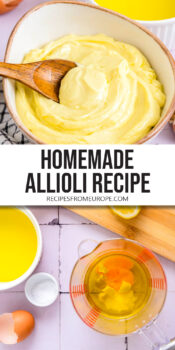
Allioli, also known as Alioli or Ajoaceite, is the Spanish version of the delicious aioli sauce. It is the perfect accompaniment to many dishes like seafood paella or patatas bravas.
This Alioli is the one my mom has been making for as long as I can remember. It’s fluffy, silky, a bit pungent, and super addictive. Not to mention how easy and quick it is to make.
You could say it takes longer to gather the ingredients and clean up afterwards than it does to make the alioli, so give it a try!

In Spain, there are two sides when it comes to Alioli. Some say that real allioli is made only with garlic and olive oil by hand with a mortar and pestle.
Others with a more modern and easy approach make allioli with an egg and an immersion blender (much easier and mellow in my opinion).
If you ask people, the vast majority will say this is their preferred version of alioli.
Ingredients
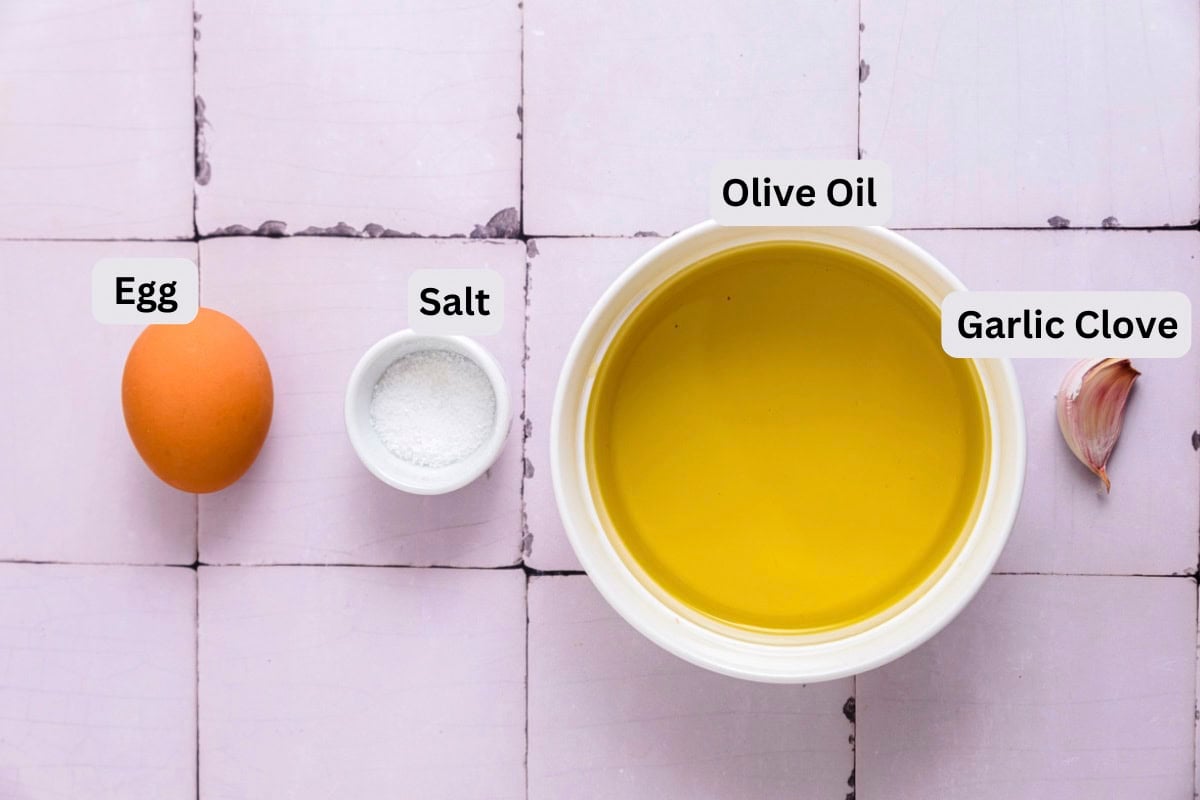
Here are all the allioli ingredients you will need to make this garlicky sauce:
- Garlic clove – The fresher the garlic the better. Avoid any garlic cloves that have bruises or are a bit yellow or brownish in color. Don’t substitute with any other type of garlic (pre-minced, powder, etc.)
- Salt
- A squeeze of lemon juice – Preferably fresh lemon juice. If you don’t have any, you can use lime, white wine vinegar, or rice vinegar.
- Olive oil – I don’t recommend using extra virgin olive oil since the flavor is very strong, use non-extra virgin olive oil instead. As a rule of thumb, choose any golden olive oil instead of those that tend to be green. Don’t substitute with another type of oil.
- Egg – Very fresh egg at room temperature. The size of the egg doesn’t matter, it just needs to be fresh.
Recipe Tips
- The egg should be at room temperature. If the egg is cold straight from the fridge, your alioli will not mix properly. It should be out of the fridge for at least 1 hour before use.
- By removing the central stem of the garlic clove we reduce the pungency. You can leave it or remove it depending on your preference.
- Adding a squeeze of lemon juice not only enhances the flavors but also helps stabilize the emulsion. If you don’t have a lemon, you can use lime, white wine vinegar, or rice vinegar.
- If your alioli is too liquid, you can add more egg and a bit more olive oil to thicken it. A liquid alioli is still delicious and can be eaten – it probably happens because the egg was not at room temperature.
- If your alioli curdles, you can fix it by adding another egg.
Get a Taste of Europe
Join 3000+ readers and get European recipes and family favorites to your inbox every week.
You can unsubscribe anytime. No spam. For more details, review our Privacy Policy.
How to Make Spanish Allioli – Step by Step Instructions
You can find all the recipe process photos in this section, so that you can follow along if you want to see what each step should look like.
Otherwise, feel free to skip to the detailed recipe card at the bottom of the post.

First, peel the garlic clove and cut it lengthwise to remove the central stem (optional – you can leave the stem if you prefer).

Crack the egg and add it to a tall glass or container, along with the garlic clove, salt, olive oil, and lemon juice.

Place the immersion blender in the center of the glass or container and process for 30 seconds. During the first 20-25 seconds don’t move the blender at all.
Only towards the end, when most of the olive oil is incorporated into the emulsion, gently move the blender to finish incorporating the olive oil. Avoid overmixing.

Transfer the allioli to a bowl and enjoy immediately or refrigerate in a sealed container in the fridge until needed. Enjoy!
Storage Tips
Alioli will keep in the fridge for up to 3 days in a sealed container. Do not freeze.
Related Recipes
Here are some other European sauces and dips that you can make at home:
- Homemade Mayonnaise
- Balkan Red Pepper Spread (Ajvar)
- Greek Tzatziki
- Spanish Romesco Sauce
- Marinara Sauce

Ingredients
- 1 garlic clove, more to taste
- 1 egg, at roo temperature
- 1/2 teaspoon salt
- 1 squeeze lemon juice
- 3/4 cup + 1 tablespoon olive oil, see notes
Instructions
- Peel the garlic clove and cut it lengthwise to remove the central stem.1 garlic clove
- Crack the egg and add it to a tall glass or container, along with the garlic clove, salt, olive oil, and lemon juice.1 egg, 1/2 teaspoon salt, 3/4 cup + 1 tablespoon olive oil, 1 squeeze lemon juice
- Place the immersion blender in the center of the glass or container and process for 30 seconds. During the first 20-25 seconds don’t move the blender at all. Only towards the end, when most of the olive oil is incorporated into the emulsion, gently move the blender to finish incorporating the olive oil. Avoid overmixing.
- Transfer the allioli to a bowl and enjoy immediately or refrigerate in a sealed container in the fridge until needed.
Notes
- The egg and the garlic should be very fresh.
- Don’t use extra virgin olive oil since the flavor is very strong, use another type of olive oil instead. As a rule of thumb, use any golden olive oil instead of those that tend to be green.
- The egg should be at room temperature (take it out of the fridge at least 1 hour before use). If the egg is cold straight from the fridge, your alioli will not mix properly.
- By removing the central stem of the garlic clove we reduce the pungency. You can leave it or remove it depending on your preference.
- Adding a squeeze of lemon juice enhances the flavors and helps stabilize the emulsion. If you don’t have a lemon, you can use lime, white wine vinegar, or rice vinegar.
- If your alioli is too liquid, you can add more egg and a bit more olive oil to thicken it. It’s more likely to happen when the egg is not at room temperature.
- If your alioli curdles, you can fix it by adding another egg.
Nutrition
This nutritional information has been estimated by an online nutrition calculator. It should be seen as a rough calculation and not a replacement for professional dietary advice.