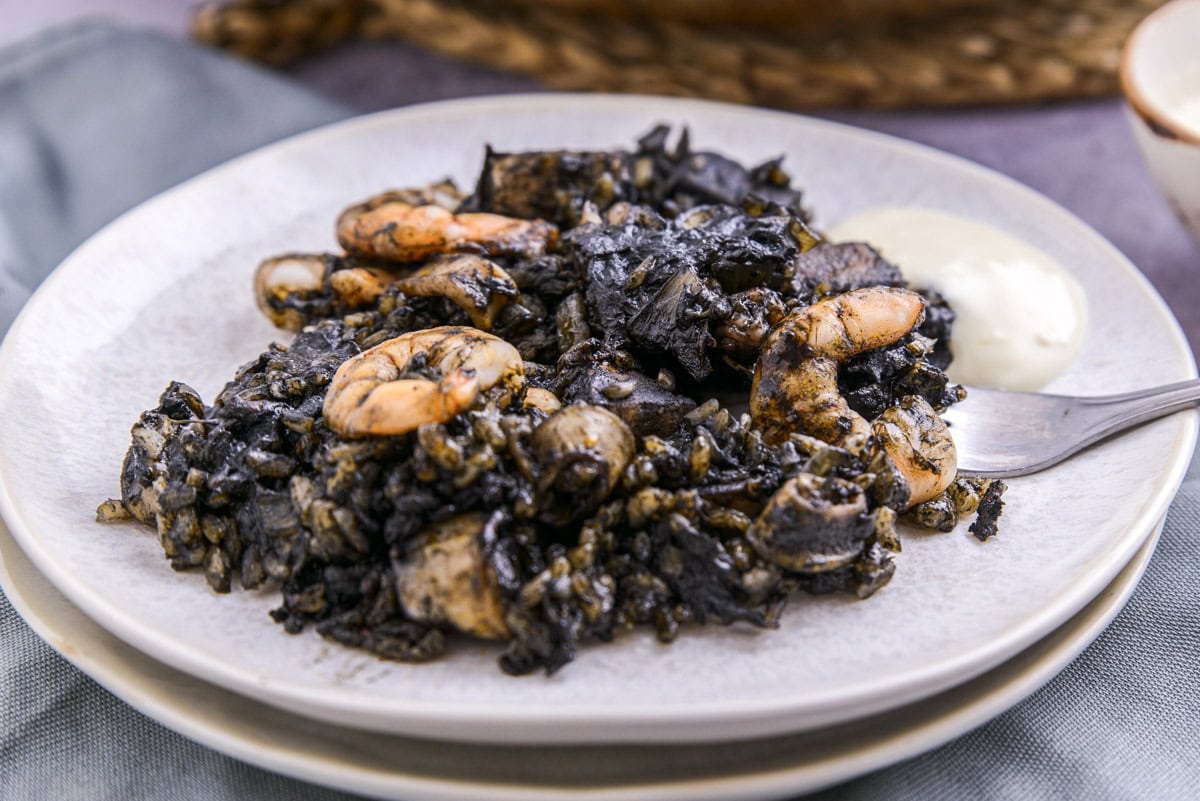
Arroz negro (literally black rice) is a delicious rice dish with squid ink and seafood from the Valencia and Catalonia regions of Spain. It is made with short-grain rice and gets its signature color from squid ink.
Traditionally, it’s made with either calamari or cuttlefish (sometimes both), prawns, and fresh red tuna, but there are some variations, of course. It’s one of the simplest “arroces” or Paella dishes to make, and it’s always a great hit.
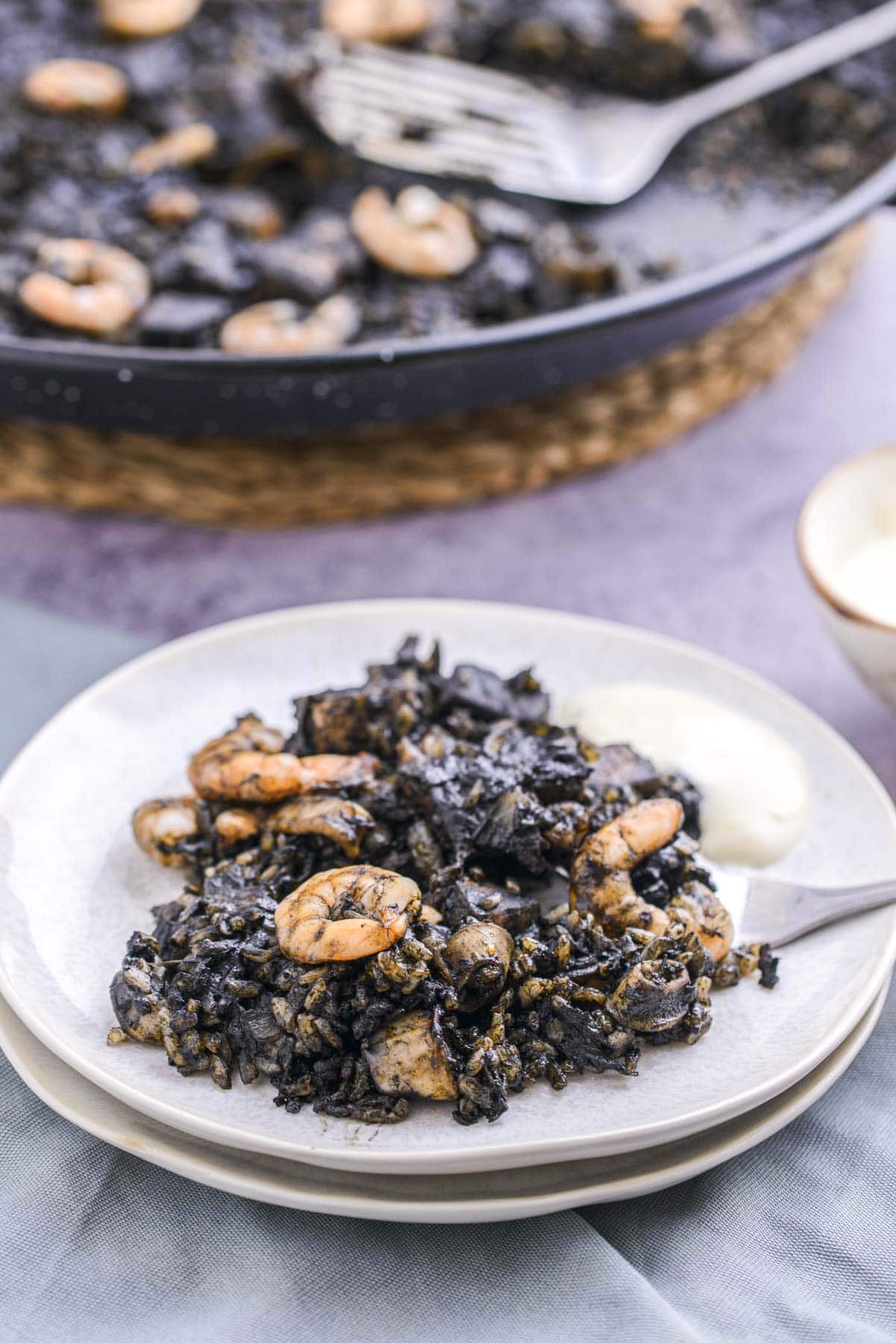
This dish, like any Paella, is typically eaten for lunch on the weekend, never for dinner. Since it’s made with fish and seafood, you can serve it with a chilled white wine or beer, and with a side of allioli sauce.
Also, in case you’re interested: Arroz negro is not called “paella negra” or “black paella”. You can find it translated as such on some English-speaking websites as a way to explain the dish to foreigners, but Spaniards don’t call it that.
Ingredient Notes
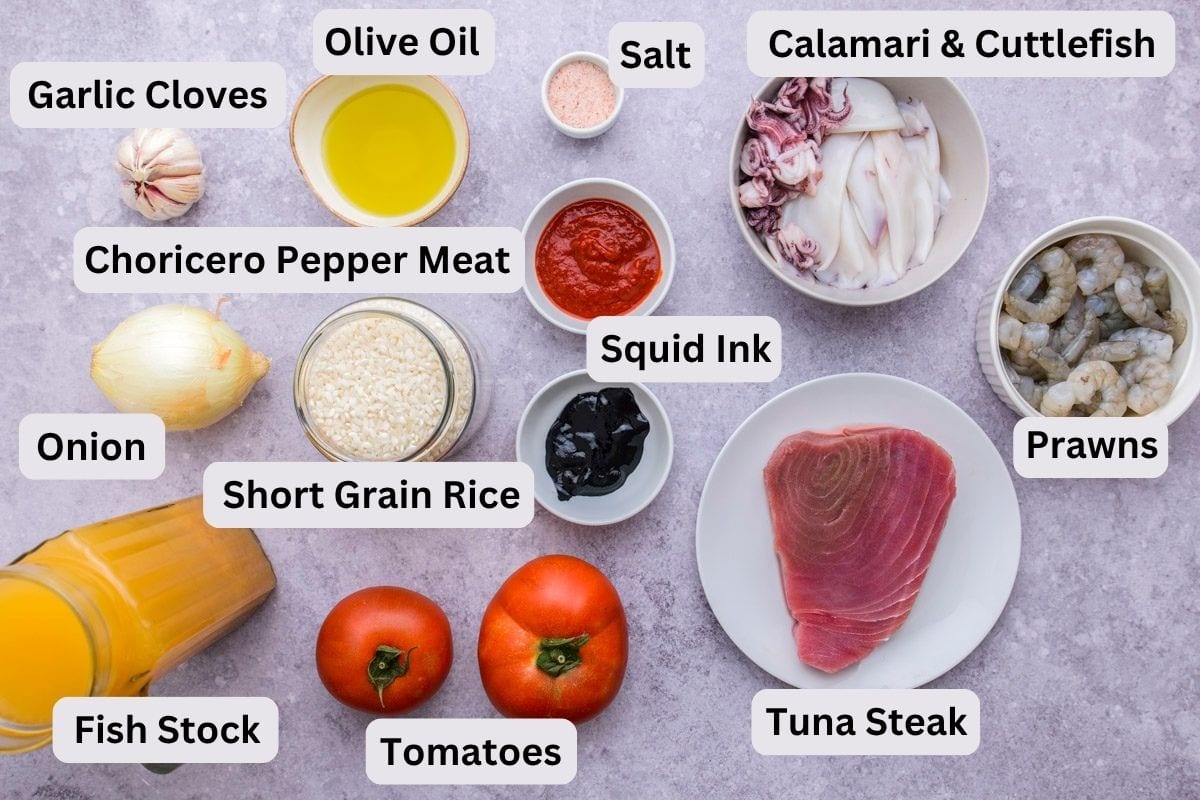
- Calamari and cuttlefish – Use a mix of calamari and cuttlefish if you can find both. Otherwise, use whichever you have available.
- Prawns – Either smaller prawns or king prawns. Alternatively, you can use raw shrimp.
- Tuna steak – Either a red or yellow tuna steak.
- Rice – Use short-grain rice, especially Bomba, Sendra, or Calasparra. If you can’t find any of these, choose rice that is white, short, and round. Italian risotto varieties work well, especially Carnaroli. Don’t use sushi rice and avoid basmati, long-grain, and parboiled rice.
- Fish stock – You can either make the stock at home or use store-bought fish stock.
- Pimiento choricero meat, or ñora pepper meat, or sweet paprika powder – If you can find either ñora or choricero, that’s great. In case you can’t, just use sweet paprika powder, since it will give very similar results.
- Garlic cloves – Use firm garlic cloves that aren’t dried out for the best taste.
- Olive oil – In this case, you don’t need to use extra virgin olive oil – regular olive oil is fine. Avoid any other vegetable oil since it would change the flavor drastically.
- Tomatoes – Use Large, ripe tomatoes.
- White onion – A white onion is milder than a yellow onion, but if I can’t find a white onion, a yellow onion works as well.
- Squid ink – One of the main ingredients for this recipe. It will add color and flavor to the dish. Outside of Spain, you can often find it at specialty stores. The commercialized versions are often made with cuttlefish ink. Unfortunately, it can’t be substituted with anything else.
- Salt – Enhances the flavor of the dish. Adjust to taste depending on the saltiness of the fish stock and squid ink.
- Allioli – For serving. You can easily make allioli at home.
- Lemon – Optional, for serving.
Recipe Tips
- For arroz negro, the amount of heat and the size of the pan are crucial. Paella and arroces are usually made in a wide and shallow pan, so use a large burner. Try to avoid using a pan that is larger than your burner, or the rice may not cook evenly.
- The calamari and/or cuttlefish and tuna should be cleaned and cut into bite-sized pieces. The prawns (or shrimp) should be deshelled and cleaned, but are used whole.
- The sofrito and majada steps are crucial. I highly suggest taking your time to cook the onion and slightly caramelize it (not fully caramelize but bring it to a very golden point), and do the same with the grated tomato and majada.
- The majada (mortar and pestle paste) can be made with garlic and either choricero pepper meat or ñora pepper meat. If you can’t find either the pepper meat or the dehydrated peppers, you can use sweet paprika powder and a teaspoon of olive oil.
- If you can only find dried choricero or ñora peppers, simply rehydrate them with hot water while you are sautéing the onions. Then scrape their meat with a knife and add it to the mortar.
- The squid ink adds color and flavor to the dish. It is thick (almost like a thick cream) and quite salty, which is why it’s very important to go easy on any extra salt you add.
- For the best flavor distribution, dissolve the squid ink in some fish stock before adding it to the pan.
- To control the saltiness, taste the fish stock once you’ve mixed it with the squid ink and adjust the extra salt you add accordingly.
- Once the rice has been evenly distributed in the pan, don’t mix it or move it around.
- Squid ink tends to thicken while cooking the rice, so you’ll notice the dish gets a bit richer and creamier while cooking. To avoid it from burning, it’s important to keep an eye on it at all times and lower the heat so it does not evaporate too quickly. Use the times in the recipe as guidelines and adjust depending on your stovetop.
- Heat control is crucial. Once the rice is added, start with a higher heat, then reduce it to medium-low or low, and then simply let it rest (usually covered) with the heat switched off.
- Listen for the crackling sound near the end of cooking when the stock is almost absorbed, and it’s creating that caramelized crust on the bottom of the pan (known as “socarrat”).
- To get the perfect socarrat without burning the bottom: Once it starts to make the sound, you’ll see that there’s still a bit of stock visible. At this point, taste a few grains.
- If they are halfway cooked but still a bit hard, lower the heat so the remaining stock does not evaporate too quickly. Cook for 2-3 more minutes at the lower heat and then stop and let it rest. Taste it first to check if the rice is fully cooked (let it rest uncovered) or a bit hard still (let it rest covered).
- If the rice is almost cooked when the sound starts, let the rest of the stock evaporate by cooking for 2 more minutes at the higher heat. Then let it rest uncovered.
Get a Taste of Europe
Join 3000+ readers and get European recipes and family favorites to your inbox every week.
You can unsubscribe anytime. No spam. For more details, review our Privacy Policy.
How to Make Arroz Negro – Step-by-Step Instructions
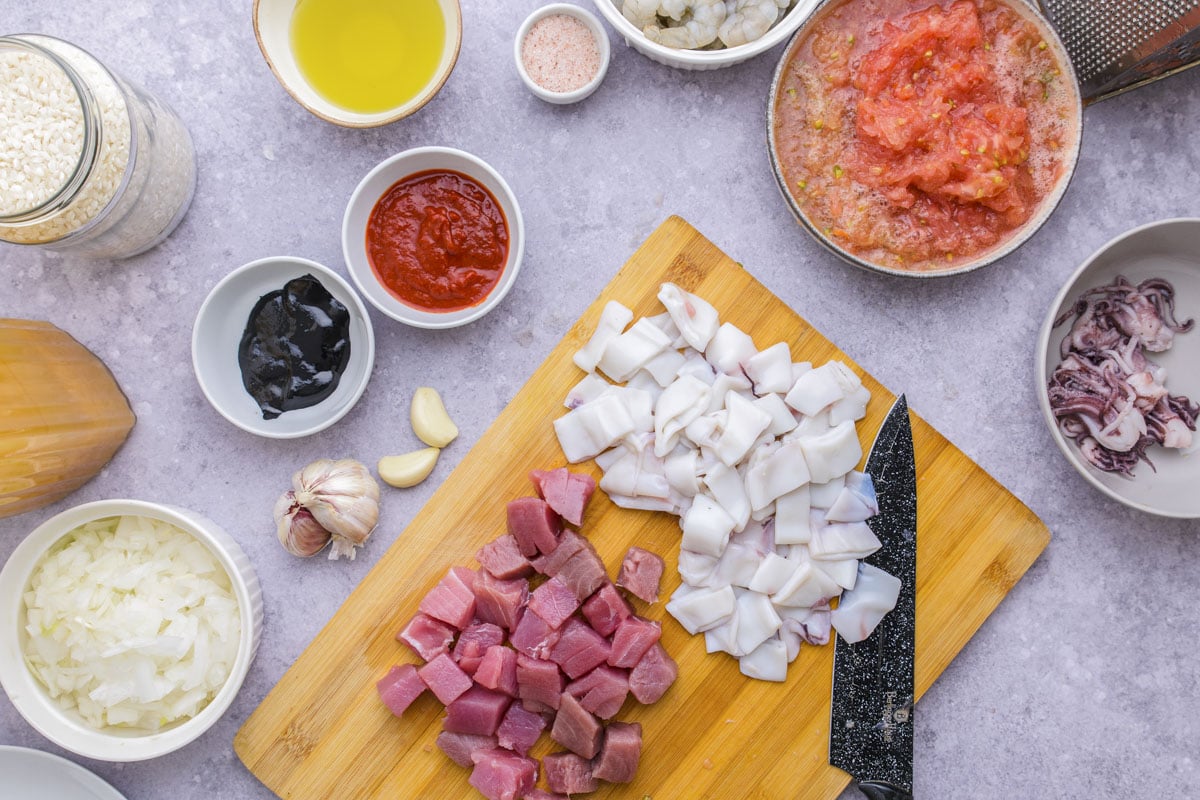
First, cut the calamari and/or cuttlefish as well as the tuna steak into bite-sized pieces. Set aside.
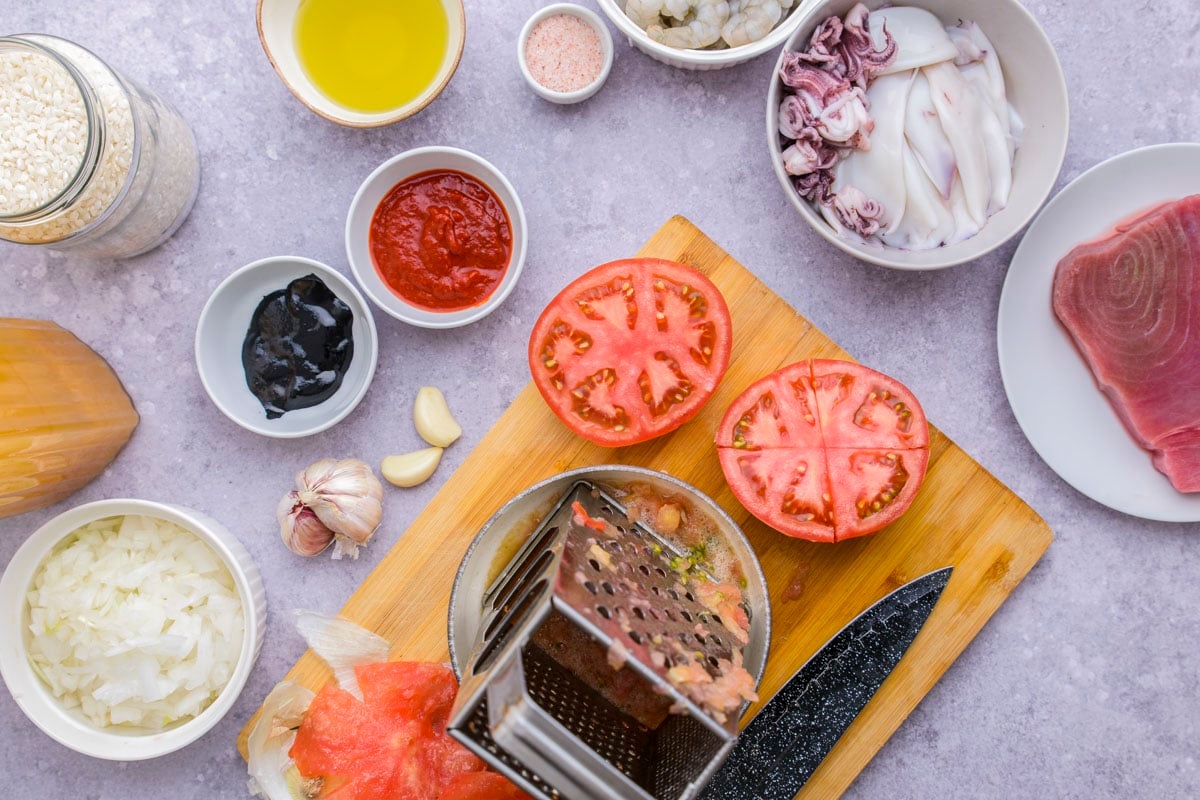
Next, cut the tomatoes in half and grate the flesh into a bowl. Discard the skins.
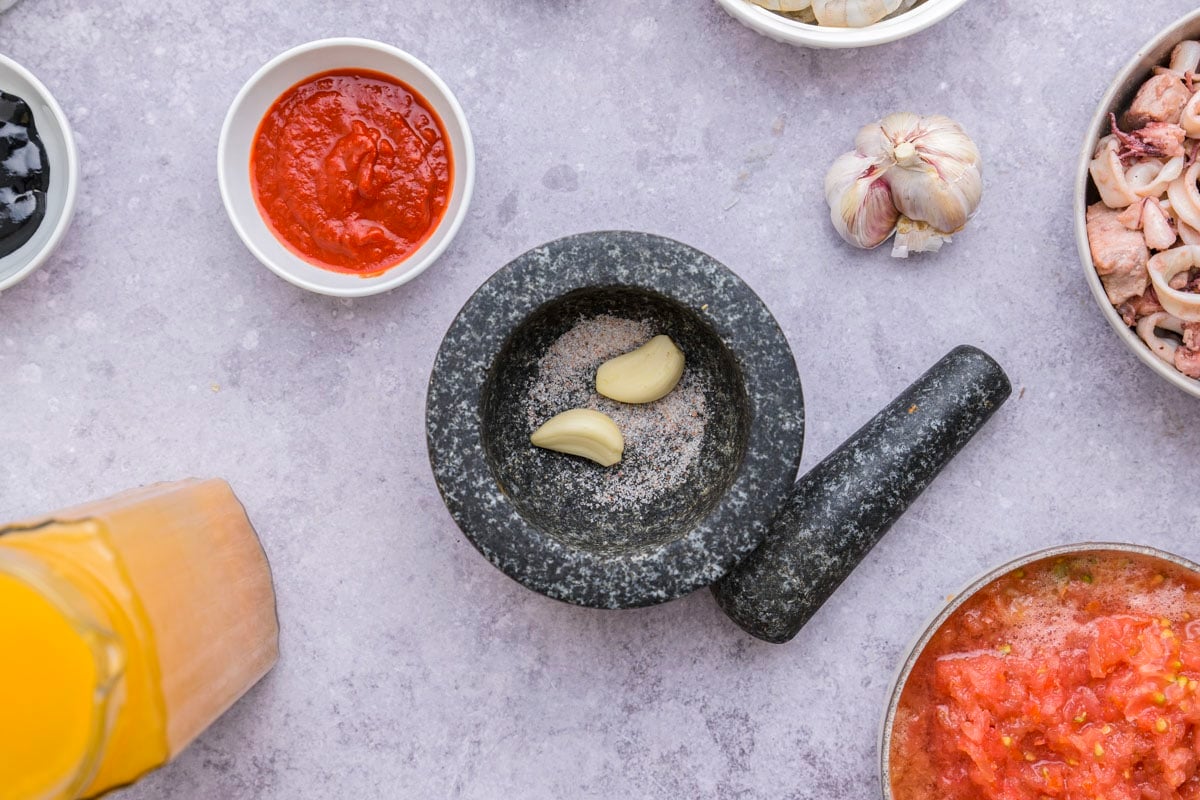
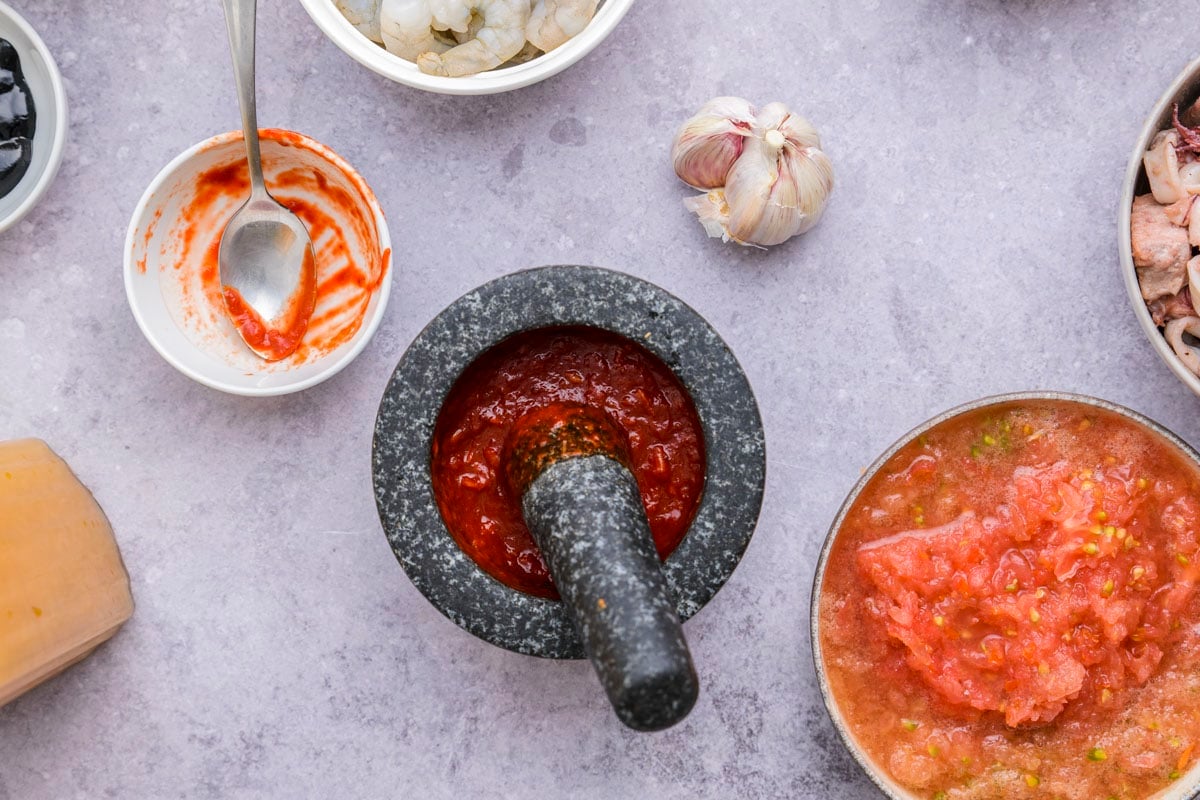
Next, peel the garlic cloves and add them to the mortar with some salt. Add the pimiento choricero meat (or paprika powder with some olive oil) and mash until you have a smooth paste.
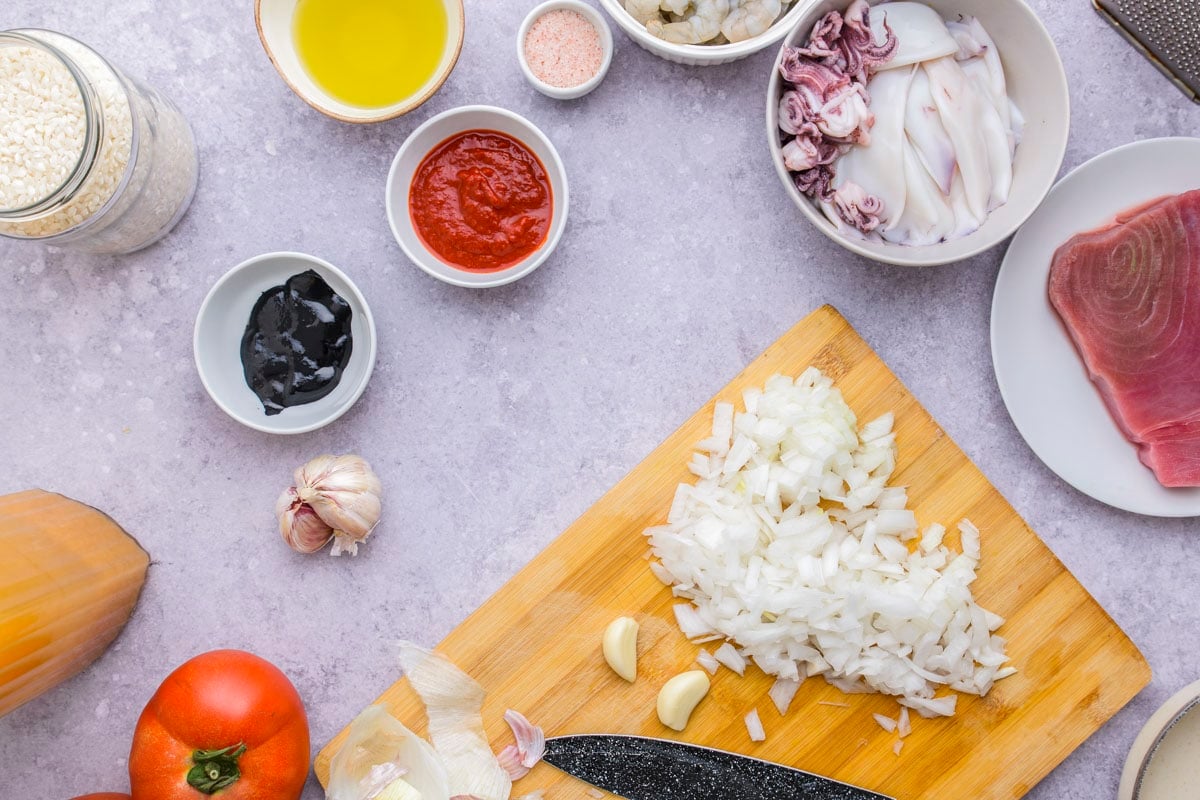
Also, peel the onion and finely dice it.
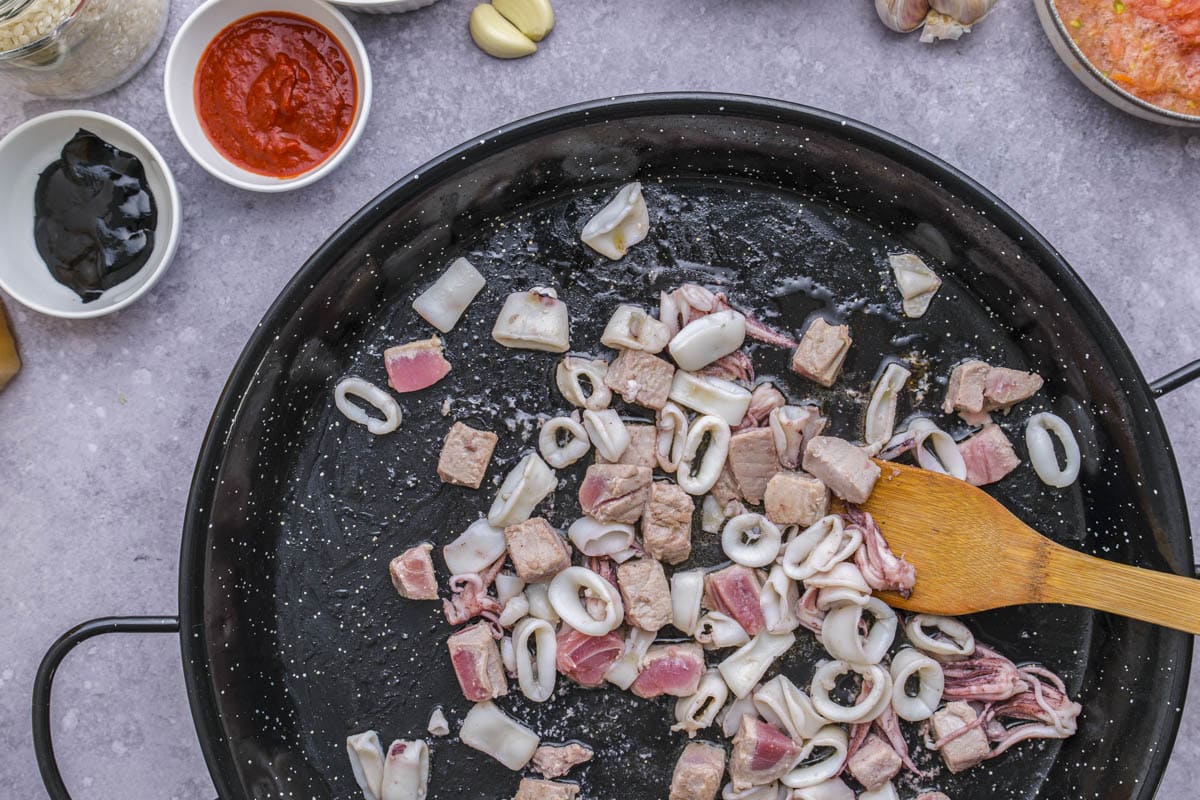
Now, heat half the oil in a large pan over medium-high heat and add the calamari/cuttlefish and tuna.
Cook for about 2-3 minutes, turning frequently, then remove them from the pan and set aside.
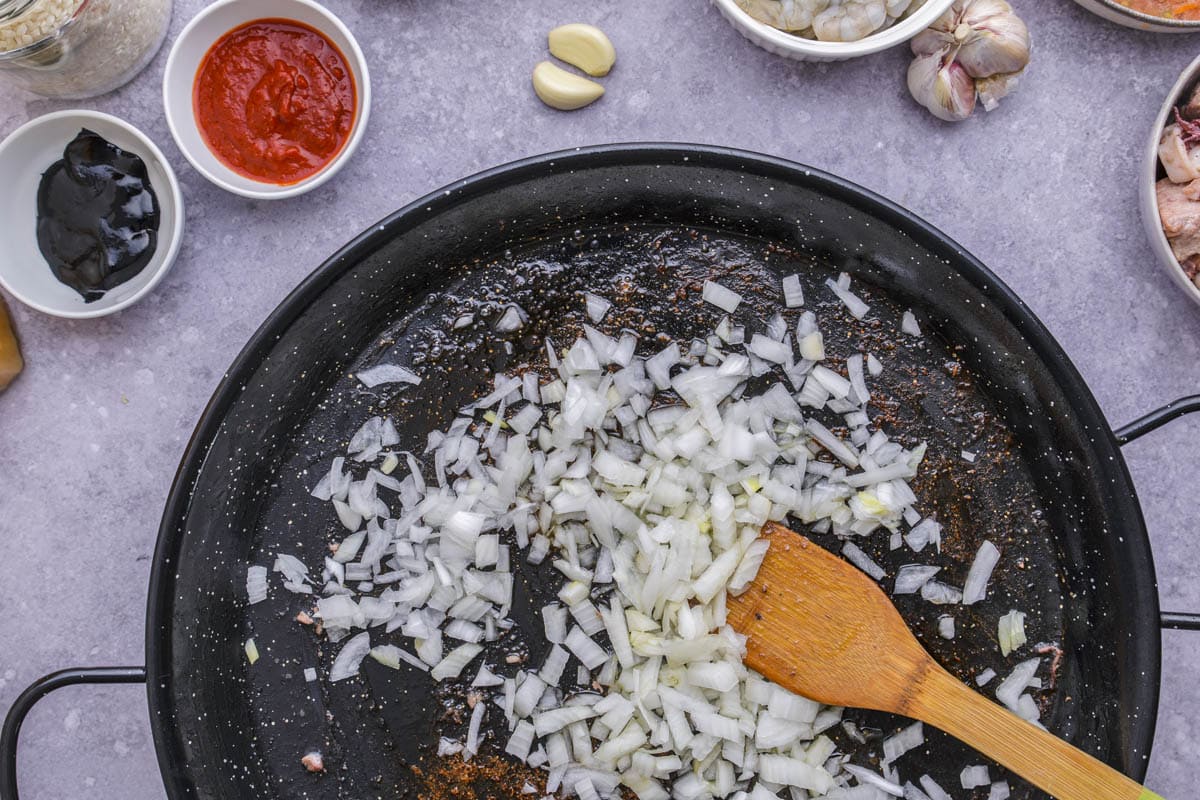
Next, add the rest of the oil and the diced onion to the pan. Sauté over medium heat until golden and fragrant. Stir frequently.
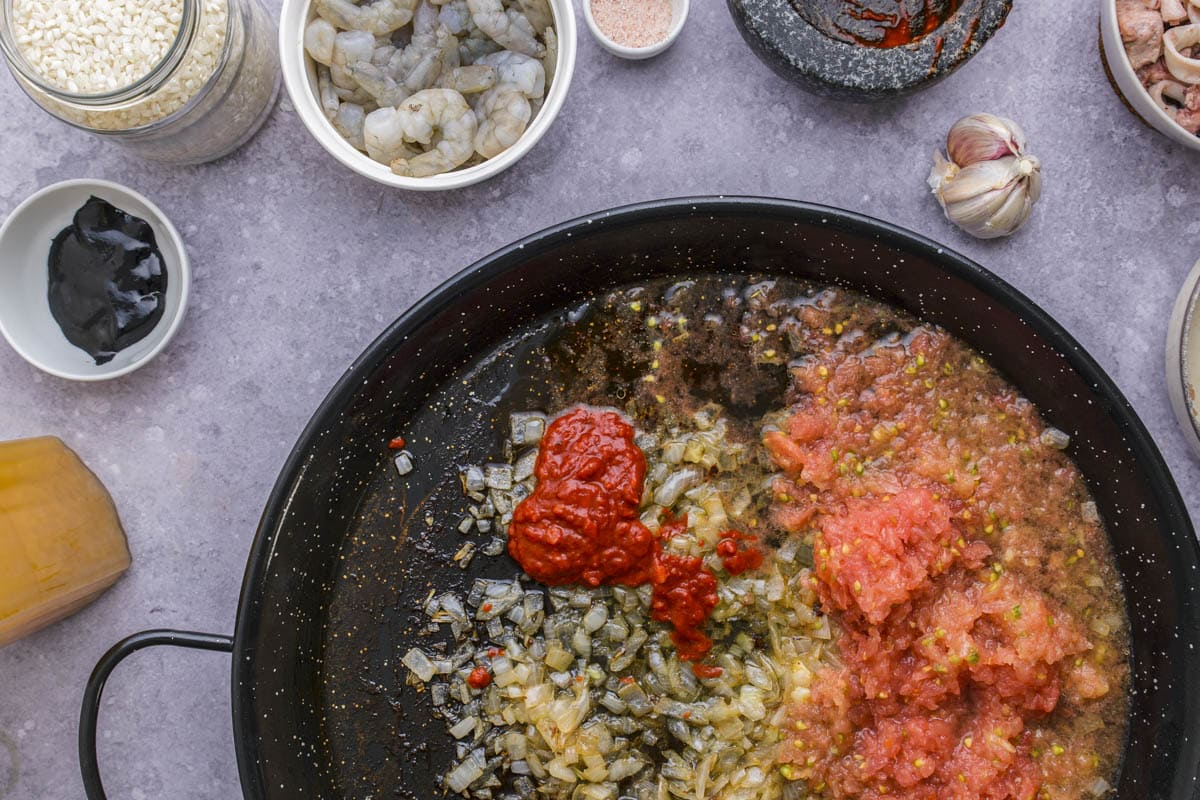
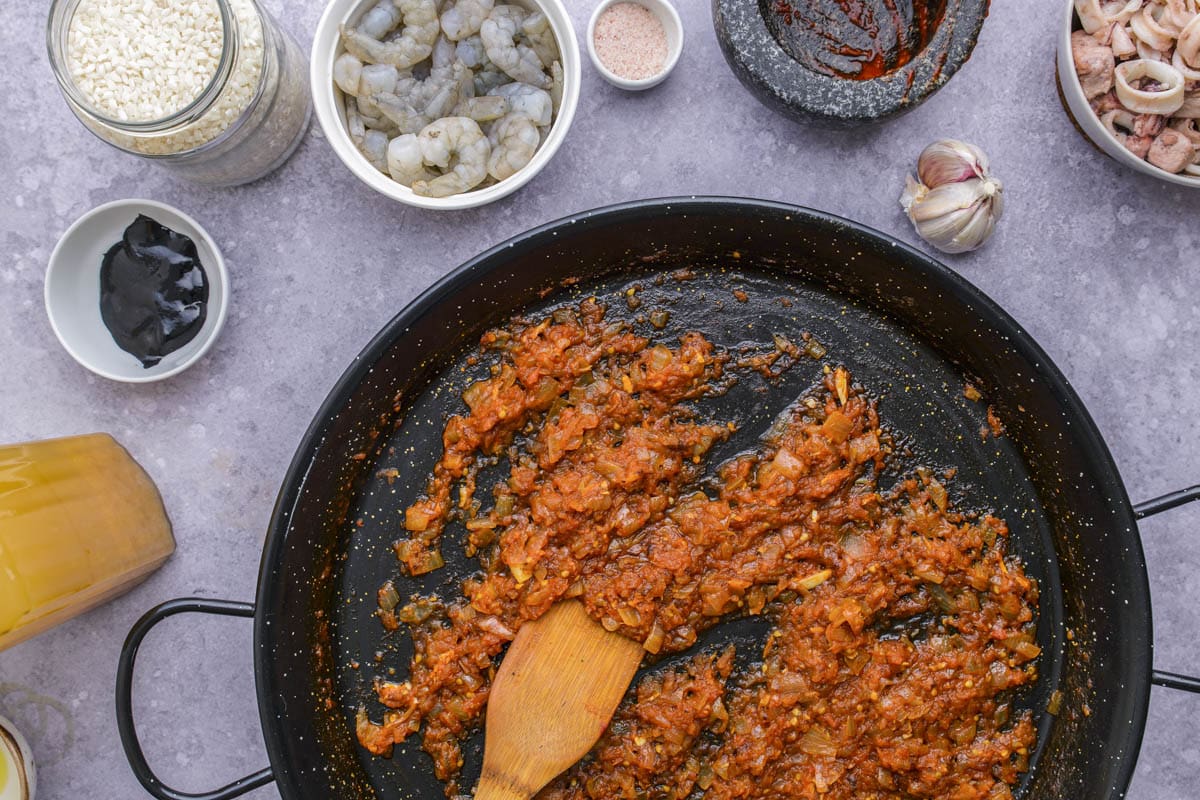
Next, add the garlic and pepper mixture to the pan as well as the grated tomatoes. Mix well and cook for 5-6 minutes until most of the liquid has evaporated and it’s a slightly darker color.
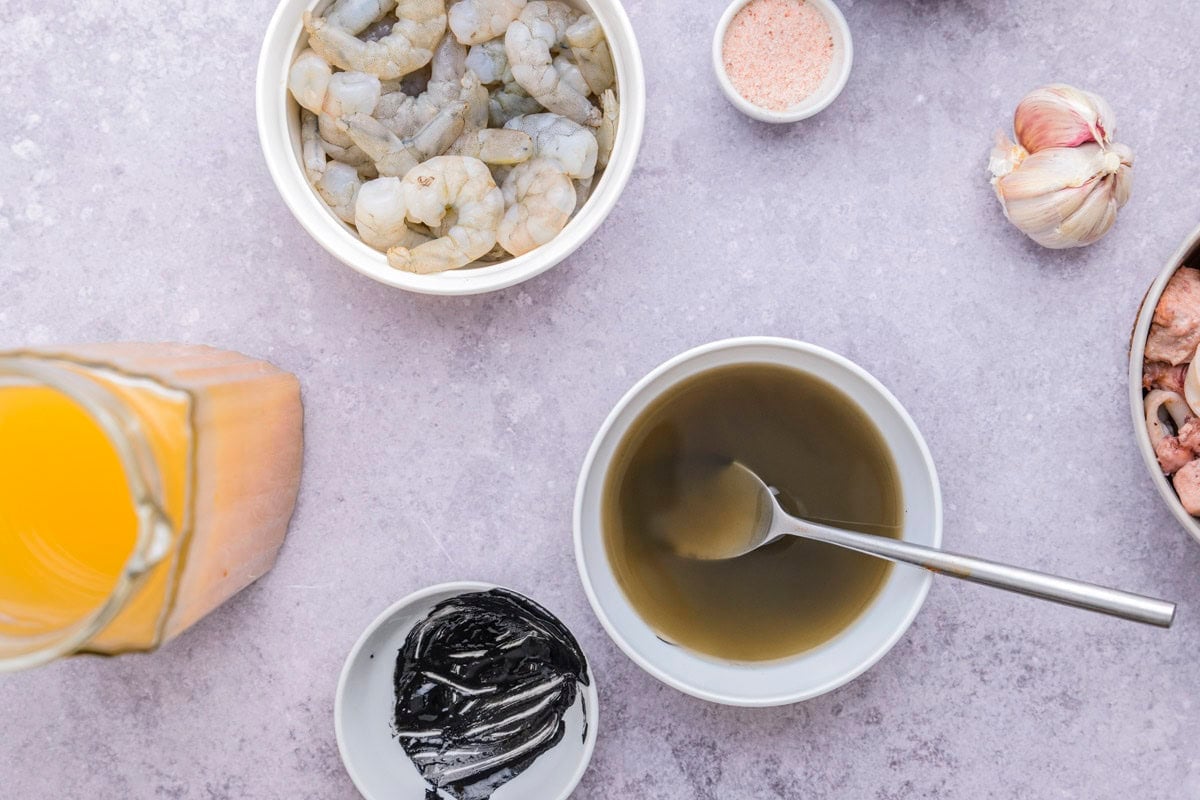
While the sofrito is cooking, dissolve the squid ink in a cup of the fish stock. Set aside.
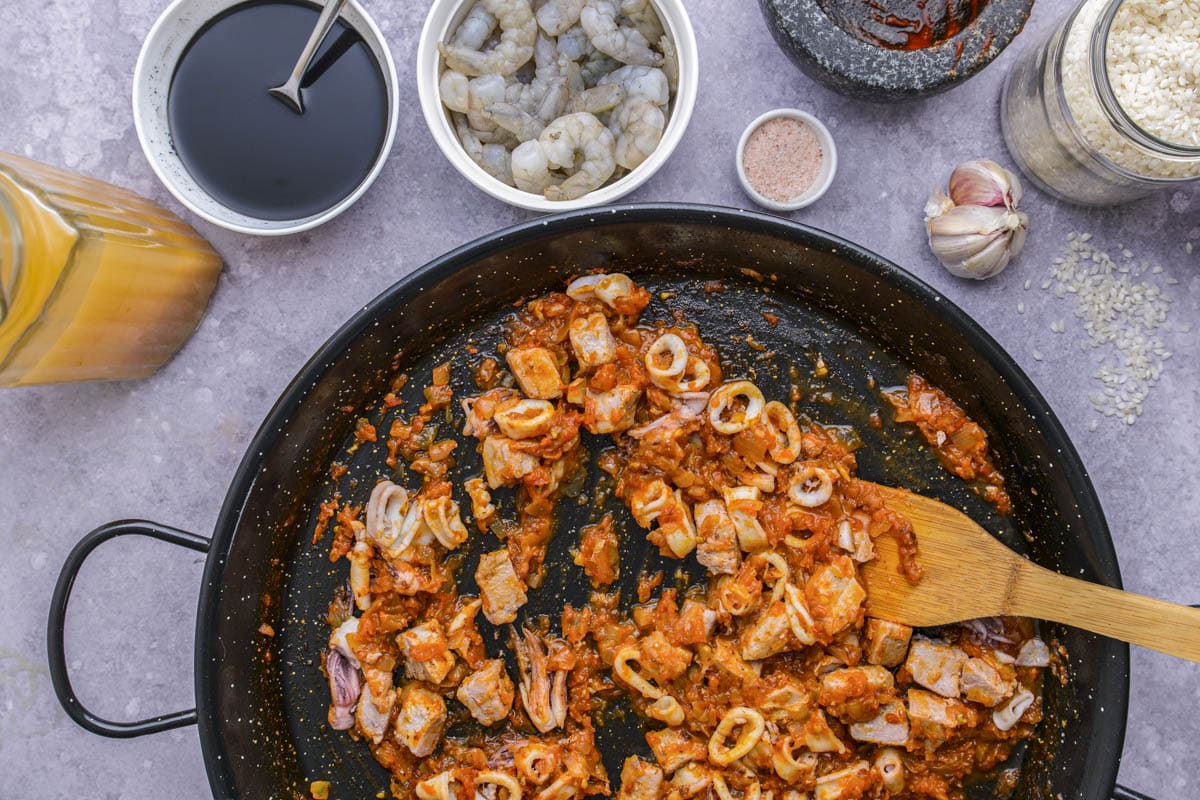
Now add the calamari and/or cuttlefish and tuna back to the pan and mix well.
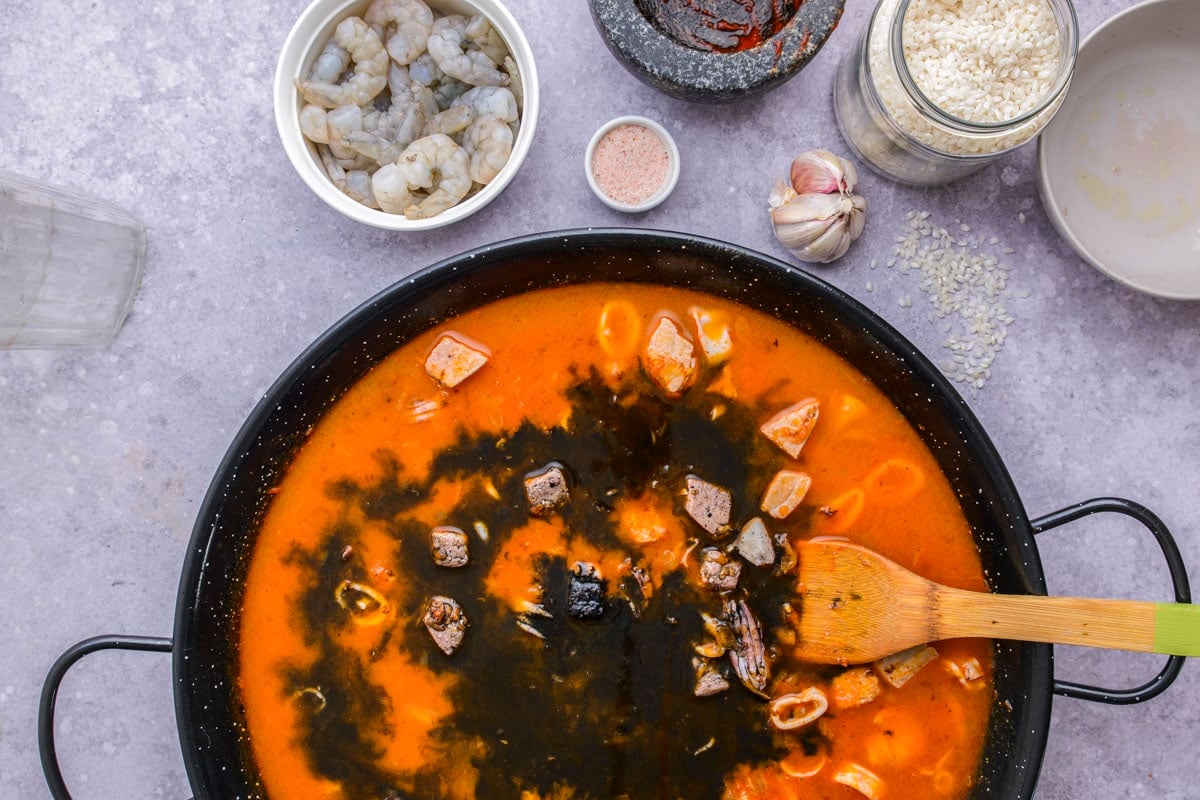
Add the fish stock and then pour in the dissolved squid ink. Add salt (if needed) and bring everything to a boil.
Once boiling, add the rice and distribute it evenly with a wooden spoon or spatula. Gently shake the pan to help level the rice. From this point, avoid stirring the rice.
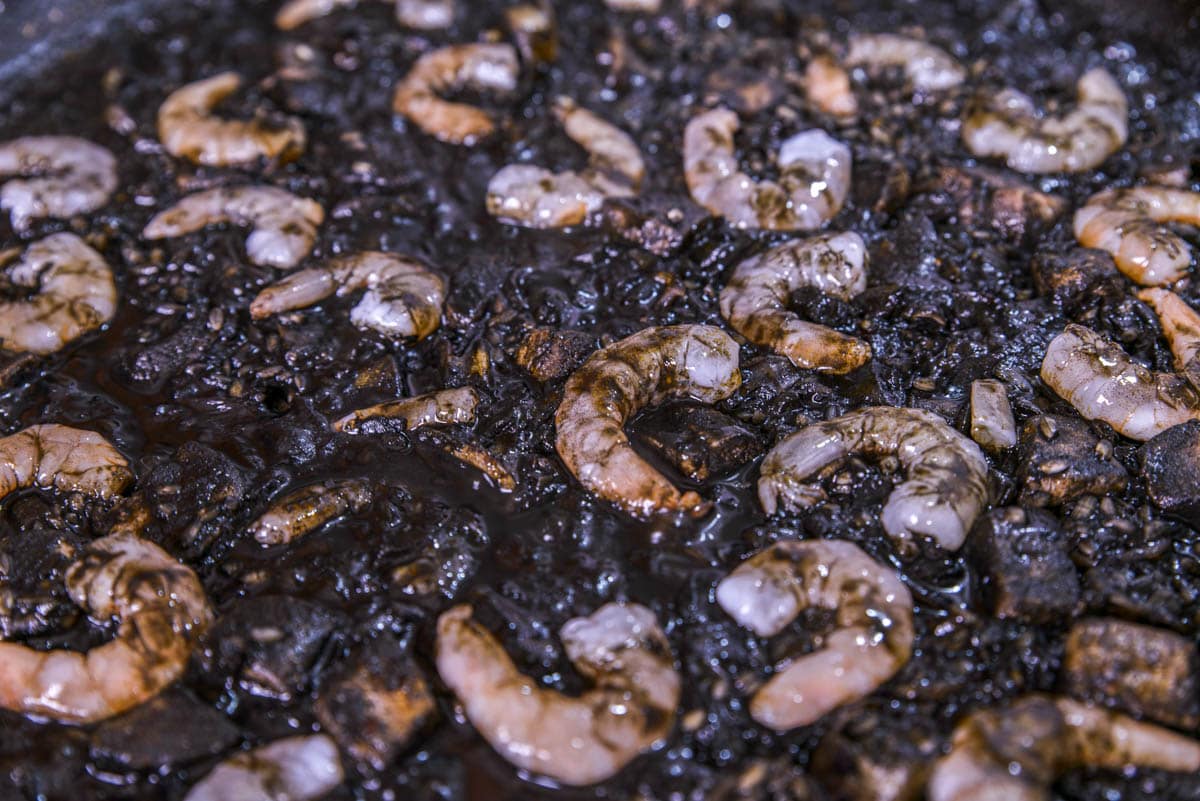
Cook over high heat for 10 minutes, then lower the heat to medium and cook for an additional 3 minutes. Then add the prawns and slightly press them into the rice and stock. Then cook for another 2 minutes.
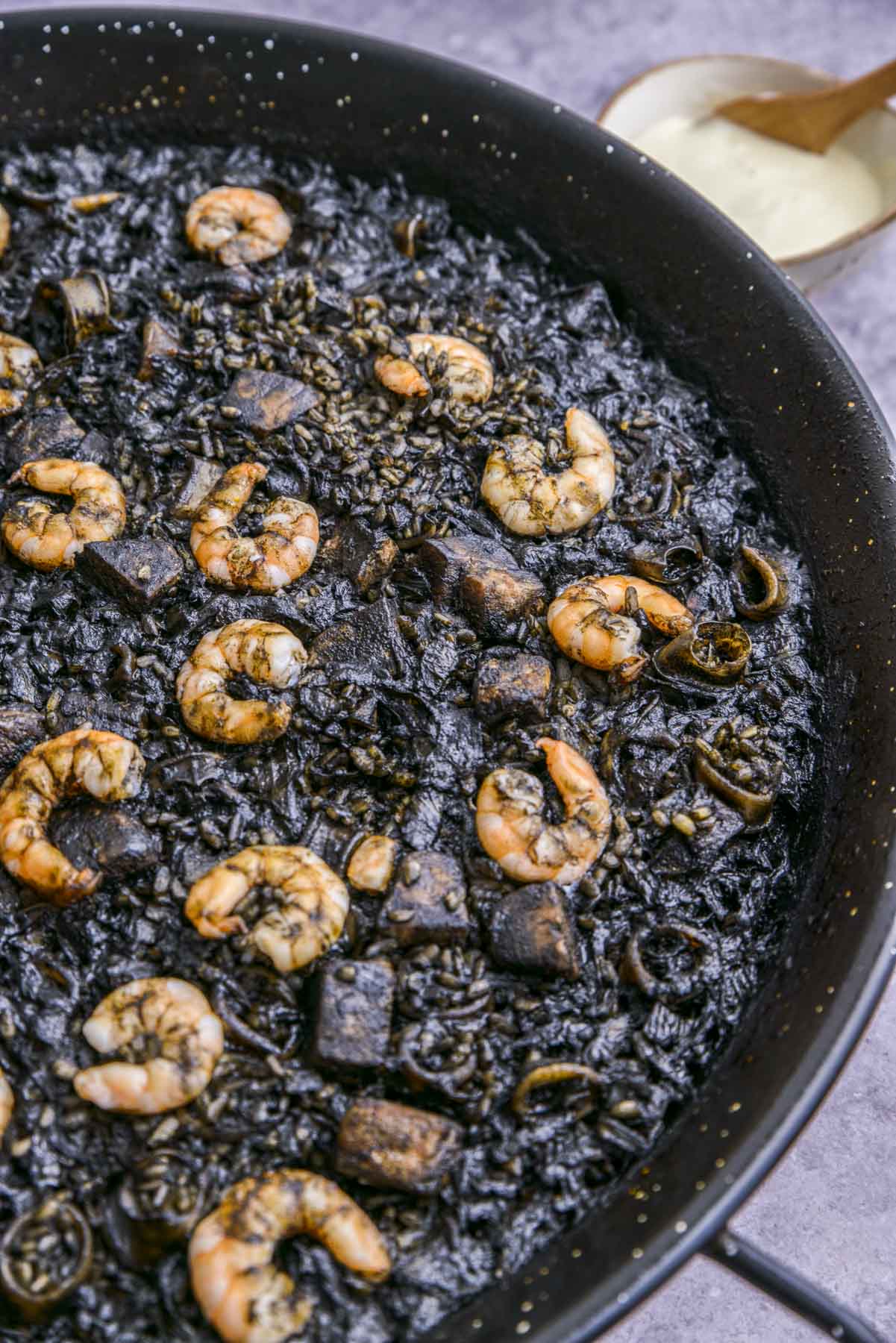
Remove the pan from heat. Cover it with a lid and a few kitchen towels to trap the heat and steam (if needed – see notes section). Then let it rest for 5 minutes to allow the rice to finish cooking.
Uncover and serve on plates or eat directly from the pan with allioli and lemon (optional). Enjoy!
Storage Tips
Arroz negro is usually eaten right after being made, but if you have leftovers, you can store them in a sealed container with a lid in the fridge for up to 3-4 days.
Whenever you want to eat the leftovers, you can reheat them in a pan with a bit of olive oil.
Related Recipes
Here are a few more Spanish dishes that you might also enjoy:
- Authentic Paella Valenciana
- Vegetable Paella (Paella de Verduras)
- Spanish Migas (Migas Murcianas)
- Fideuá (Spanish Noodle “Paella”)
- Empanada Gallega (Savory Galician Pie)
Ingredients
- 7 ounces calamari and/or cuttlefish, cleaned
- 1 red tuna steak , (about 5 ounces / 140 grams)
- 2 large tomatoes, ripe
- 2 garlic cloves
- 2 tablespoons pimiento choricero meat (or ñora pepper meat), alternatively 1 teaspoon sweet paprika powder
- 1 large white onion
- 4 tablespoons olive oil
- 2 2/3 cups fish stock, (21.6 fluid ounces)
- 4 tablespoons squid ink
- 1 teaspoon salt, or to taste
- 11.3 ounces short-grain rice
- 7 ounces prawns or shrimp, cleaned
- allioli and lemon, optional (to serve)
Instructions
- Cut the calamari (and/or cuttlefish) and tuna steak into bite-sized pieces. Set aside.7 ounces calamari and/or cuttlefish, 1 red tuna steak
- Cut the tomatoes in half and grate the flesh into a bowl, discarding the skins. Set aside.2 large tomatoes
- Prepare the “majada” for the sofrito: Peel the garlic cloves and add them to a mortar with some of the salt. Add the pimiento choricero meat (or paprika powder and some olive oil) and smash until you have a smooth paste. Set aside.2 garlic cloves, 2 tablespoons pimiento choricero meat (or ñora pepper meat)
- Peel the onion and dice it as finely as possible. Set aside.1 large white onion
- Heat half of the olive oil in the paella pan or large shallow skillet over medium-high heat. Add the calamari/cuttlefish and tuna pieces and cook for about 2-3 minutes on all sides. Remove them from the pan and set aside.2 tablespoons olive oil
- Add the rest of the olive oil to the pan. Then add the diced onion and sauté over medium heat, stirring frequently, until it turns golden and fragrant.2 tablespoons olive oil
- Add the garlic and pimiento choricero mixture to the pan, along with the grated tomatoes. Mix well and cook for 5-6 minutes until most of the liquid has evaporated and the sofrito has a slightly darker color.
- While the sofrito is cooking, dissolve the squid ink in a cup of the fish stock. Set aside.4 tablespoons squid ink, 1 cups fish stock
- Return the calamari/cuttlefish and tuna to the pan and mix well with the sofrito.
- Add the stock and the dissolved squid ink to the pan. Add the salt and bring everything to a boil.1 2/3 cups fish stock, 1 teaspoon salt
- Once boiling, add the rice and distribute it evenly with a wooden spoon or spatula. Gently shake the pan to help level the rice. From this point, avoid stirring the rice.11.3 ounces short-grain rice
- Cook over high heat for 10 minutes, then lower the heat to medium and cook for an additional 3 minutes.
- Add the prawns, slightly pressing them into the rice and stock using the wooden spatula. Continue cooking for 2 more minutes.7 ounces prawns or shrimp
- Remove the pan from heat. Cover it with a lid and a few kitchen towels to trap the heat and steam (if needed – see notes section). Let it rest for 5 minutes to allow the rice to finish cooking.
- Uncover and serve on plates or eat directly from the pan with allioli and lemon (optional).allioli and lemon
Notes
- Use a mix of calamari and cuttlefish if you can find both. Otherwise, use whichever you have available.
- Use short-grain rice, especially Bomba, Sendra, or Calasparra. If you can’t find any of these, choose rice that is white, short, and round. Italian risotto varieties work well, especially Carnaroli. Don’t use sushi rice and avoid basmati, long-grain, and parboiled rice.
- You don’t need extra virgin olive oil for this recipe, refined olive oil is fine. Avoid any other vegetable oil since it would change the flavor drastically.
- The majada (mortar and pestle paste) can be made with garlic and either choricero pepper meat or ñora pepper meat. If you can’t find either the pepper meat or the dehydrated peppers, you can use sweet paprika powder and a teaspoon of olive oil.
- If you can only find dried choricero or ñora peppers, simply rehydrate them with hot water while you are sautéing the onions. Then scrape their meat with a knife and add it to the mortar.
- The squid ink adds color and flavor to the dish. It is thick (almost like a thick cream) and quite salty, which is why it’s very important to go easy on any extra salt you add. You can taste the fish stock and squid ink once they’re mixed and adjust the salt you add accordingly.
- The amount of heat and the size of the pan are crucial. This dish is usually made in a wide and shallow pan, so use a large burner. Try to avoid using a pan that is larger than your burner, or the rice may not cook evenly.
- Heat control is crucial. Once the rice is added, start with a higher heat, then reduce it to medium-low or low, and then simply let it rest (usually covered) with the heat switched off.
- To get the perfect socarrat (caramelized crust on the bottom of the pan) without burning the bottom: Once it starts to make the crackling sound, taste a few grains of rice.
- If they are halfway cooked but still a bit hard, lower the heat so the remaining stock does not evaporate too quickly. Cook for 2-3 more minutes at the lower heat and then stop and let it rest. Taste it first to check if the rice is fully cooked (let it rest uncovered) or a bit hard still (let it rest covered).
- If the rice is almost cooked when the sound starts, let the rest of the stock evaporate by cooking for 2 more minutes at the higher heat. Then let it rest uncovered.
Nutrition
This nutritional information has been estimated by an online nutrition calculator. It should be seen as a rough calculation and not a replacement for professional dietary advice.